Your thermostat says “Heat.” Your furnace is humming. Air is coming through the vents, just as it should. One small detail has apparently escaped the system’s attention: your house is getting colder.
A furnace blowing cold air doesn’t necessarily mean the entire heating system has failed.
Furnaces use separate components to produce heat and circulate air, so the blower can keep working even when the burners or heating elements aren’t doing their job.
Possible explanations range from a thermostat setting that takes seconds to correct to an ignition problem that requires professional repair.
Before assuming the worst, a few simple checks can help identify where the heating process stopped cooperating.
Is the Furnace Blowing Cold Air, or Just Warming Up?
Start with the timing. Cold air that disappears after a minute or two usually points toward normal startup behavior.
Air that stays cold throughout the heating cycle suggests the furnace may not be producing heat.
Warm air that suddenly turns cold is another clue, particularly when restricted airflow or a safety shutdown interrupts the burners and the furnace keeps turning on and off every few minutes, which is what is making it short-cycle.
Knowing which behavior you’re dealing with can save you a considerable amount of troubleshooting in the wrong direction.
Even after the blower starts, cooler air sitting inside the ductwork may reach your vents first. A short delay is normal. Several minutes of continuous cold airflow, especially when the burners never ignite, is a different story. At that point, the furnace has had enough time to make its entrance.
What to check: Give your furnace a few minutes to complete its startup cycle.
If warm air eventually arrives and heating continues normally, there’s probably nothing to fix.
Cold air isn’t the only questionable greeting a furnace can offer after months of inactivity. A faint dusty smell may accompany the first heating cycle , but a persistent burning odor deserves its own investigation. Why does the furnace smell like it’s burning the first time you turn on the heat? is a good place to start.
However, air that never warms up, or starts warm before quickly turning cold, suggests something else is happening.
That distinction matters because a furnace that never produces heat has a different problem than one that produces heat but cannot keep its burners operating.
Is the Thermostat Telling the Furnace to Heat?
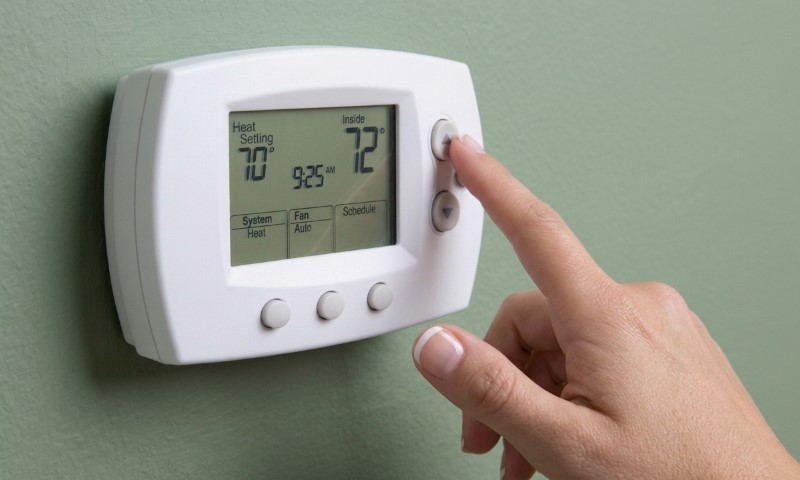
Before opening the furnace cabinet or assuming an expensive component has failed, check the small device controlling the entire operation.
A thermostat can create surprisingly convincing furnace problems.
Start with three settings:
- Heating mode – Make sure the thermostat is set to “Heat,” not “Cool” or “Off.”
- Target temperature – Set the desired temperature several degrees above the current room temperature to request heating.
- Fan setting – Switch the fan setting to “Auto” instead of “On.”
That last setting deserves particular attention.
When the fan is set to “On,” the blower continuously circulates air, including between heating cycles when the burners aren’t operating.
Consequently, your vents may blow room-temperature air even though the furnace is heating normally whenever the thermostat requests it.
Switching to “Auto” generally allows the blower to operate during heating cycles and any necessary furnace-controlled cooling periods.
Also, check programmable thermostat schedules. A power outage, incorrect clock setting, or seasonal time change could leave your heating system following instructions you never intended.
Clue: If the blower continues operating without a heating request, despite correct thermostat settings, a wiring, communication, or control problem may be responsible. A technician can investigate further.
Is Restricted Airflow Shutting Down the Heat?
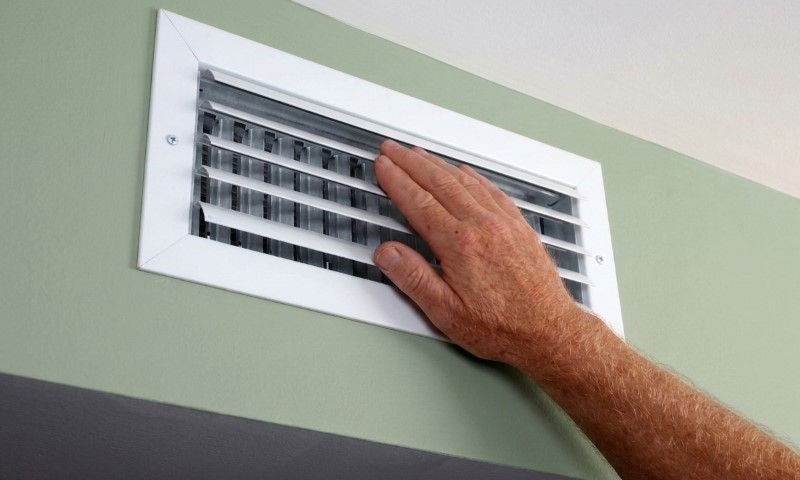
Your furnace might be capable of producing heat but unable to move enough air through its system safely.
Asking yourself, “why is my heat blowing cold air?” after the furnace started normally? Restricted airflow is one of the first suspects worth investigating.
A Dirty Air Filter Can Trigger Overheating
Air filters collect dust, hair, and other airborne particles. Eventually, accumulated debris can restrict the airflow passing through the furnace.
Without enough air moving across the heat exchanger, internal temperatures can climb too high.
A safety component called the high-limit switch may then shut off the gas burners to prevent overheating. Meanwhile, the blower may continue running to cool the furnace.
Result? Air keeps moving, but the heating has stopped.
Inspect your furnace filter monthly. Many standard 1-inch filters need replacement every one to three months, although actual intervals depend on household conditions, usage, and manufacturer recommendations.
Department of Energy guidance recommends replacement at least every three months, although some households need it sooner.
A filter packed with dust makes the blower work harder, and restricted airflow can eventually shut down the heating process altogether.
Not a particularly impressive outcome for a component designed to catch dust.
Blocked Vents Can Cause Similar Problems
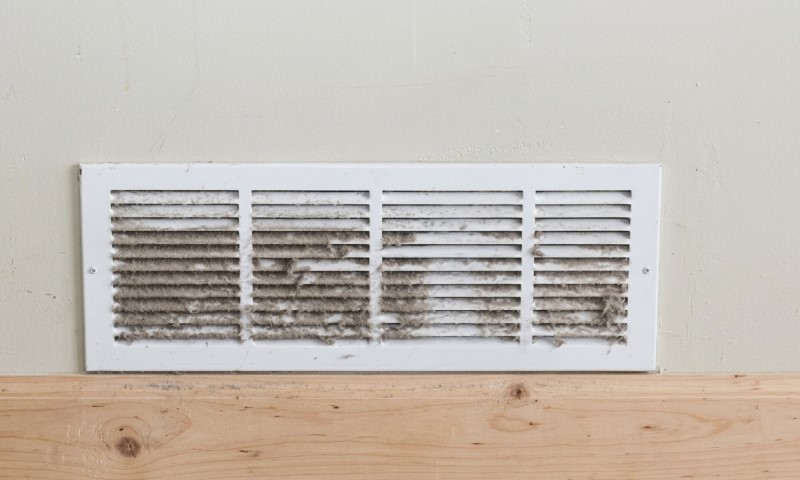
A clean filter won’t help much if your furniture is covering return-air grilles or too many supply registers are closed.
Check that:
- Supply registers are open and unobstructed.
- Return-air grilles aren’t covered by furniture, rugs, or stored belongings.
- Furniture and other objects aren’t restricting airflow around the furnace.
Avoid closing large numbers of vents in an attempt to save energy.
Depending on the duct design, doing so can increase system pressure and interfere with proper airflow.
Duct Leaks Can Steal Your Heat
Sometimes, the furnace produces heat correctly, but the rooms never receive enough of it.
Disconnected or leaking ducts can release heated air into attics, crawl spaces, or other unconditioned areas.
Sealing and insulating leaky ducts can improve heating and cooling efficiency by as much as 20%, according to ENERGY STAR. A burner that refuses to ignite won’t care about better ductwork, but rooms that never warm up might.
Your furnace might be doing its job perfectly well, only to have a substantial portion of the heated air disappear before reaching the rooms that need it.
Clue: If some rooms heat normally while others stay cold, investigate the ductwork rather than immediately blaming the furnace.
Apparently, producing warm air and delivering it to the correct room are two separate assignments.
Are the Burners Failing to Ignite or Stay Lit?
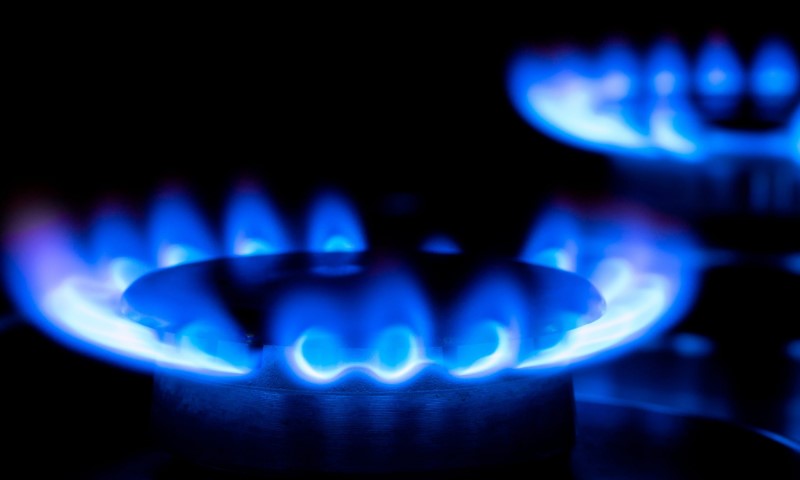
If airflow and thermostat settings look normal, attention turns to the components responsible for creating heat.
Gas furnaces must ignite their fuel and confirm that combustion is occurring safely.
Several components participate in that process, and a problem with any one of them can prevent normal heating.
A Failed Igniter or Pilot Light
Older gas furnaces may use a standing pilot light, while newer models typically rely on electronic ignition systems.
When the pilot goes out, or the electronic igniter fails, the burners may never ignite.
Depending on the furnace and its fault condition, the blower might still operate without producing warm air.
Owners of older furnaces should consult manufacturer instructions before attempting to relight a pilot. Never repeatedly attempt ignition when the furnace is malfunctioning or gas is suspected.
A Dirty Flame Sensor
Modern gas furnaces commonly use a flame sensor to confirm that the burners have ignited.
If the sensor cannot detect the flame reliably, the control system shuts off the gas supply to the burners as a safety precaution.
A dirty or faulty flame sensor can therefore produce a distinctive symptom: the burners ignite, operate briefly, and then shut off.
Sometimes, repeated failed attempts cause the furnace to enter a temporary safety lockout.
Knowing when the heat disappears can help narrow the possibilities.
| What you notice | What it may indicate |
| Burners never ignite | Ignition or fuel-supply problem |
| Burners ignite, then stop within seconds | Flame sensor or flame-detection problem |
| Heat runs briefly, then shuts off | Airflow restriction or overheating |
| Multiple ignition attempts followed by shutdown | Ignition failure or safety lockout |
Repeated ignition failures need professional attention, particularly when gas valves, burners, or other combustion components are involved.
When Should You Call an HVAC Technician?
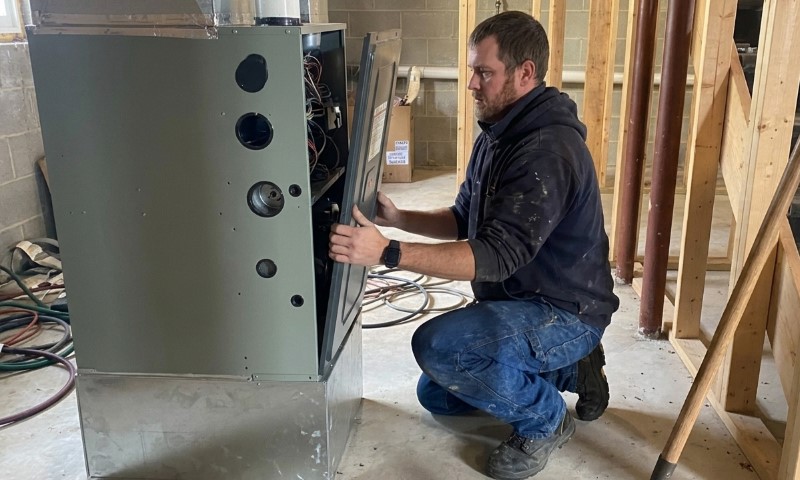
A thermostat setting or dirty filter might explain the problem, but repeated ignition failures, overheating, and safety shutdowns require professional attention.
If your furnace keeps shutting off, displays fault codes, or refuses to produce heat after the basic checks, contact an HVAC technician. Never bypass safety switches or attempt gas valve repairs.
A gas smell or sounding carbon monoxide alarm changes the situation entirely. Leave the building immediately and contact emergency services or your gas utility once you’re safely outside.
Don’t attempt further troubleshooting until the system has been declared safe.
The Fan Works, but Where Did the Heat Go?
A furnace blowing cold air can create the impression that everything is working except the one component you actually paid to use.
Fortunately, the first checks don’t require dismantling your heating system.
Confirm that your thermostat is requesting heat, switch the fan to “Auto,” inspect the air filter, and make sure your vents aren’t blocked.
A furnace that moves air isn’t necessarily a furnace that makes heat. Finding where those two jobs stopped working together is how you get closer to a warm house, without replacing parts that weren’t causing the problem.