Your garage door works perfectly in the morning. By 3 p.m., it has apparently decided that closing is no longer part of its job description.
You press the remote, the door starts moving, and then it reverses. Sometimes, it refuses to move at all. Overhead lights might flash 10 times, even though nothing is blocking the doorway.
The next morning, everything works again. Same garage door, same remote, same equipment.
Before blaming a failing motor or shopping for a replacement opener, consider something much simpler: sunlight hitting the garage door’s safety sensors.
Direct sunlight can interfere with the infrared signal that tells your opener the doorway is clear. When that happens, your garage door may refuse to close at almost exactly the same time every afternoon.
Fortunately, a quick test can help determine if sunshine is actually responsible.
How Sunlight Tricks Your Garage Door Into Staying Open
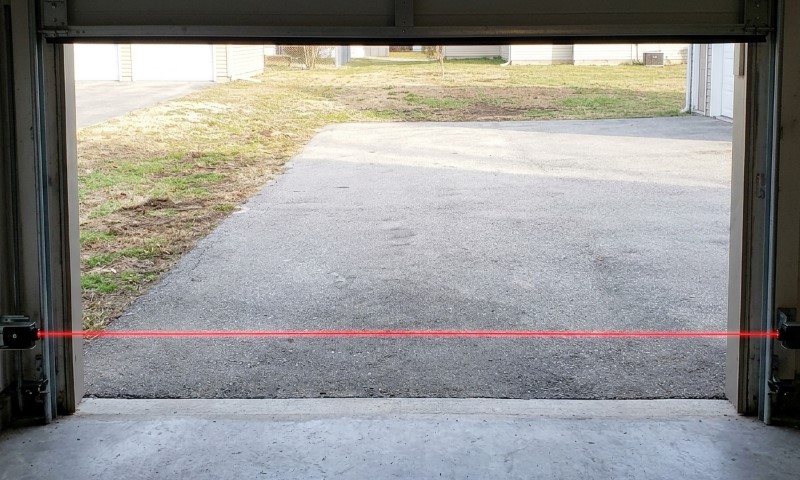
Modern automatic garage doors use two small safety sensors, often called photo-eyes, mounted near the bottom of the doorway.
One sensor sends an invisible infrared beam across the opening. Another receives that signal.
Safety sensors aren’t simply an optional accessory added to newer garage doors.
Federal safety requirements introduced additional entrapment protection for residential openers manufactured beginning in 1993, with photoelectric sensors becoming a common solution.
Their purpose is to stop a closing door before it traps someone underneath. Unfortunately, the same protective system can occasionally mistake direct sunlight for a missing infrared signal.
As long as the receiving sensor detects the beam, the opener knows its safety detection path is clear. If a person, pet, or object interrupts the beam, the opener prevents the door from closing or reverses its movement.
On many residential systems, these sensors must be installed no more than 6 inches above the garage floor.
Sunlight creates an unusual problem because it also contains infrared radiation.
NASA notes that visible light accounts for less than half of the Sun’s total radiant energy, with infrared radiation contributing a substantial invisible portion.
That matters because garage door safety sensors also communicate using infrared light.
Strong sunlight reaching the receiving lens can interfere with its ability to recognize the intended signal. Your eyes see an ordinary sunny afternoon, while the receiver has a much more complicated lighting problem.
When strong sunlight strikes the receiving sensor at the wrong angle, it can overwhelm the sensor’s ability to recognize the transmitter’s signal.
Your opener interprets the interference as a blocked or missing beam. Its response is exactly what the safety system was designed to do: stop the door.
Unfortunately, it cannot distinguish a bicycle sitting in the doorway from an afternoon sunbeam confusing its electronics.
According to Chamberlain Group’s guidance on sunlight interference, direct sunlight hitting the receiving sensor can prevent the door from closing and cause the opener lights to blink 10 times.
Why It Happens at Almost the Same Time Every Day
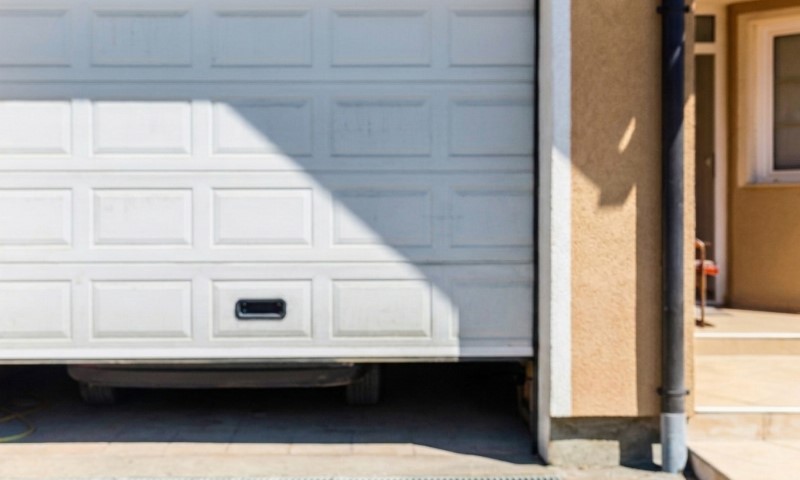
Sunlight interference often follows a predictable schedule because the sun follows a predictable path.
West-facing garages are particularly susceptible during late afternoon, when low-angle sunlight can reach the sensors. East-facing garages may experience similar problems during the morning.
However, garage orientation alone does not determine which doors develop trouble.
Both sensors face each other across the doorway, rather than pointing toward the driveway. For interference to occur, sunlight must enter the garage at an angle that reaches the receiving lens.
A nearby wall, parked vehicle, fence, or slight difference in sensor placement can change how much sunlight reaches that lens.
Consequently, two neighboring garages with nearly identical equipment can behave completely differently.
Seasonal changes complicate matters further.
Earth’s roughly 23.5-degree axial tilt explains why the trouble can appear and disappear with the seasons.
As the Sun’s apparent path changes throughout the year, its rays may reach the receiving sensor at an angle that wasn’t a problem a month earlier.
A garage door that starts misbehaving every afternoon in September may work perfectly again later in the fall, even though nobody has touched the equipment.
Your garage door hasn’t repaired itself. Its troublesome light source has simply moved.
How to Tell If the Sun Is Really the Problem
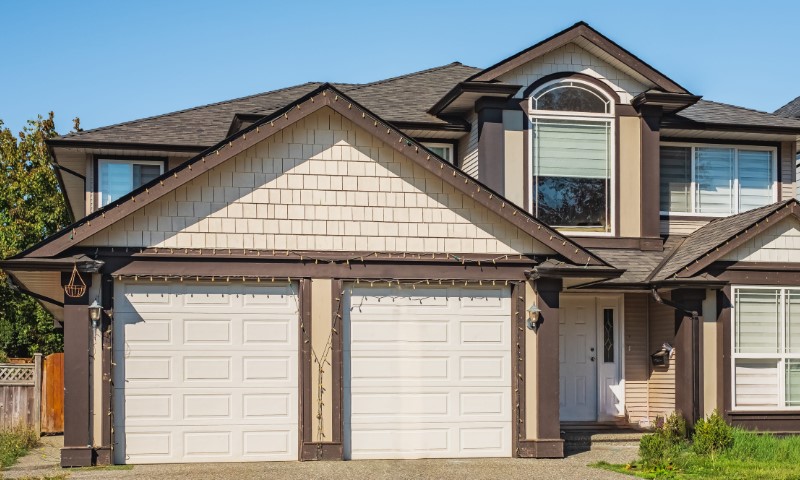
A garage door that refuses to close during sunny afternoons is suspicious, but timing alone doesn’t prove sunlight interference.
Dirty lenses, loose wiring, and misaligned sensors can produce nearly identical symptoms.
Two simple checks can help narrow down the cause without taking anything apart.
Check the Sensor Lights
Start by locating the two small sensors near the bottom of your garage door tracks.
On many Chamberlain and LiftMaster openers, their indicator lights provide useful diagnostic information:
| Sensor Light | What It Means |
| Amber light | Usually identifies the sending sensor that transmits the infrared beam. |
| Green light | Usually identifies the receiving sensor that detects the beam. |
| Steady indicator lights | Generally indicate that the sensors are communicating correctly. |
| Flickering or unlit receiving sensor | May indicate sunlight interference, misalignment, dirt, or damaged wiring. |
Note: Indicator colors and behavior vary by manufacturer and model.
Indicator colors and behavior vary among manufacturers and models, so check your opener’s manual before interpreting them.
Also, some openers turn their sensor indicators off during an energy-saving mode. An unlit sensor while the system is idle does not automatically indicate a fault.
Pay particular attention to what happens when the opener refuses to close.
If the amber indicator glows steadily but the receiving sensor’s green indicator flickers or goes dark, the problem may be affecting the signal arriving at the receiver.
A sequence of 10 flashes on certain Chamberlain and LiftMaster openers also points toward a safety sensor problem.
However, flashing lights alone cannot confirm sunlight interference. Electrical faults and sensor misalignment can trigger the same warning.
Try the Shade Test
One of the simplest diagnostic checks requires nothing more complicated than your hand or a piece of cardboard.
With the garage door fully open, the doorway clear, and the opener idle, try the following:
| Step | What to Do |
| Locate the receiver | Find the receiving sensor, usually marked by a green indicator light on compatible systems. |
| Check sunlight exposure | See if direct sunlight is hitting the sensor lens. |
| Shade the sensor | Use your hand or cardboard to block sunlight without interrupting the infrared beam. |
| Observe the indicator | Check if the receiving sensor’s light becomes steady. |
| Remove the shade | See if the indicator starts flickering or turns off again. |
If the indicator becomes steady when shaded and loses its signal when exposed, sunlight interference is a strong possibility.
For example, consider a west-facing garage that opens normally at 8 a.m. but refuses to close at 4 p.m.
During the afternoon failure, its sending sensor shows a steady amber light, while the receiving sensor’s green light flickers.
Placing cardboard beside the receiver blocks the direct sun without covering the infrared beam. Its green indicator immediately becomes steady. Removing the cardboard causes the flickering to return.
However, an indicator that continues flickering under shade suggests another issue, such as poor alignment, weak connections, or damaged wiring.
One additional observation can strengthen the diagnosis: check the door again after sunlight no longer reaches the sensor.
If operation returns to normal without any adjustments, the timing supports the sunlight explanation.
Never place your hands near moving door components while performing these checks.
How to Stop the Sun Interfering With Your Garage Door
Once sunlight interference looks likely, start with the least complicated fixes.
Replacing the opener should not be your first move, particularly when its safety system is responding exactly as designed.
1. Clean Both Sensor Lenses
Dust, cobwebs, and water spots can reduce the amount of infrared light reaching the receiver.
Under ordinary conditions, the signal may still be strong enough for the sensors to communicate. Add intense sunlight, and the receiving sensor may have more trouble detecting it.
Use a soft, dry microfiber cloth to gently clean both lenses.
Avoid abrasive cleaning materials or spraying liquids directly into the sensor housings.
After cleaning, check that both indicator lights glow steadily during normal operation.
If cleaning resolves the problem, sunlight may have been aggravating an already weakened signal rather than being the sole cause.
2. Check Sensor Alignment
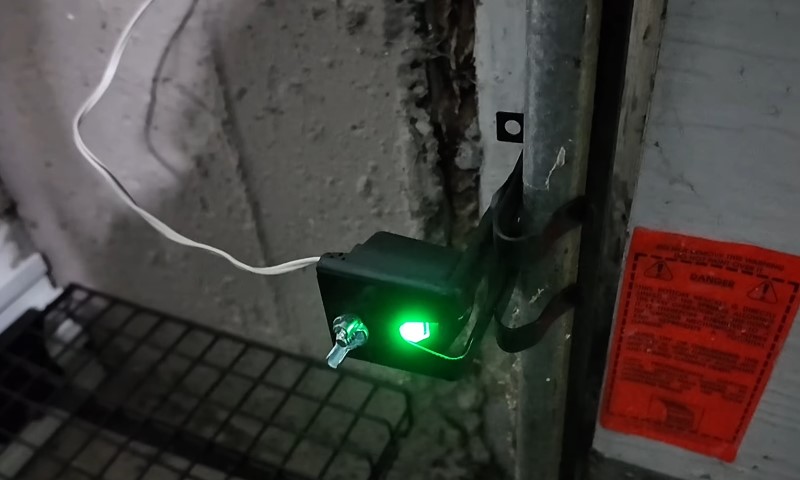
Garage door sensors must point directly toward each other.
A bumped storage box, bicycle tire, or even routine movement around the garage can shift a mounting bracket slightly.
Misalignment can reduce the infrared signal received across the doorway, making the system more susceptible to interference.
Inspect both sensors and confirm that their lenses face each other at approximately the same height.
On models with adjustable brackets, carefully loosen the mounting wing nut, adjust the sensor until its indicator becomes steady, and tighten the bracket again.
Avoid moving the sensors higher to escape sunlight. Safety sensor installation height is an important protective requirement, and many systems specify a maximum of 6 inches above the floor.
According to the Door & Access Systems Manufacturers Association, photoelectric safety sensors must sit no more than 6 inches above the garage floor.
That limit has a practical purpose: a sensor installed too high could miss a small child crawling beneath its beam.
Raising the receiver to escape afternoon sunlight might stop the irritating reversals, but it could also create a much more serious problem.
3. Install a Sun Shield
If your sensors are clean and aligned but direct sunlight still causes problems, a sun shield may provide a more permanent solution.
These small guards fit around the receiving sensor and block sunlight arriving at troublesome angles.
Unlike covering the sensor lens, a properly installed shield allows the infrared beam to pass across the doorway.
Choose a guard compatible with your sensor model and mounting arrangement.
For example, Chamberlain identifies part number 41B873 as a sun shield option for certain compatible systems.
Avoid improvised covers that obscure the lens, interfere with the beam, trap water, or prevent the sensor from operating correctly.
A shield works best when direct sunlight reaches the receiving lens at an angle the guard can block.
4. Move the Receiving Sensor to the Shaded Side
View this post on Instagram
Another possible solution is switching the sending and receiving sensors to opposite sides of the garage opening.
On compatible systems, either sensor can occupy either side as long as both remain properly connected and aligned.
Moving the receiver may place it where direct afternoon sunlight cannot reach its lens.
However, don’t assume the opposite side will always be better.
A garage that experiences afternoon interference may develop morning problems after the receiver changes sides.
Observe which side receives direct sunlight during the troublesome period before making adjustments.
Repositioning may require disconnecting and reconnecting sensor wiring. Always disconnect opener power first and follow the manufacturer’s specific instructions. If wiring changes are unfamiliar, have a qualified technician perform the work.
5. Inspect the Sensor Wiring
Sunlight may attract attention to the problem without being its actual cause.
Sensor wires can become pinched, damaged, or loose near mounting brackets and opener terminals.
Small changes in temperature can also affect marginal electrical connections, producing intermittent failures that seem connected to sunny afternoons.
Inspect accessible wiring for:
- Cracked or missing insulation
- Pinched sections near mounting brackets
- Loose or disconnected wires
- Visible corrosion around electrical connections
Shut off power before touching wiring or terminals.
If an indicator stays unreliable after cleaning, alignment, and shading checks, wiring deserves closer attention.
Replacing sensors may be necessary when a component has genuinely failed.
However, confirmed sunlight interference usually does not justify replacing an otherwise functional garage door opener.
After any adjustment, test the safety reversing system according to the manufacturer’s instructions before returning the opener to normal use.
The Sun Isn’t Always Innocent, but It’s Worth Checking First
A garage door that refuses to close every afternoon probably hasn’t developed a preference for morning shifts.
Its schedule may be pointing directly toward the cause.
When a receiving sensor loses its signal in direct sunlight and works normally under shade, you’ve identified a useful clue that can save unnecessary repairs.
Clean the lenses, confirm their alignment, and consider a compatible sun shield before spending money on replacement equipment.
If the problem persists after the sunlight moves away, investigate wiring, heat, and mechanical resistance instead.
Sometimes, fixing an apparently unreliable garage door requires nothing more than keeping a small patch of sunshine off a sensor.