

A computer freezes, a program stops responding, and the first suggestion is almost always the same: turn it off and back on again.
Usually, that advice belongs in an office, where the worst possible outcome is losing an unsaved spreadsheet. Apparently, it also has a place in commercial aviation.
Twice, the Federal Aviation Administration (FAA) issued mandatory instructions requiring airlines to periodically restart electrical systems aboard Boeing 787 Dreamliners.
In 2015, a software problem threatened to shut down the aircraft’s electrical power after 248 days of continuous operation. Five years later, another vulnerability could cause pilots to receive outdated flight information after 51 days.
Neither problem involved a faulty power button or a frozen screen. Both concerned software failures with potentially serious consequences for flight safety.
So how did one of the world’s most sophisticated passenger aircraft end up needing the same troubleshooting method as an uncooperative laptop?
The First Incident – A 248-Day Software Bug in 2015
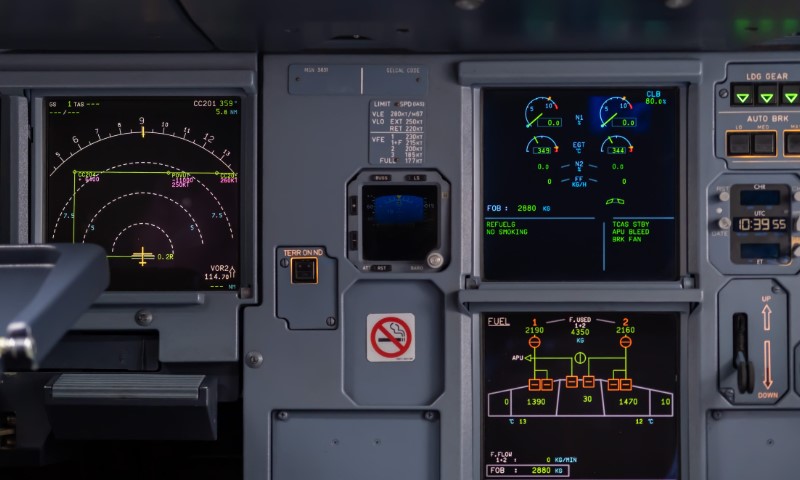
Boeing’s 787 Dreamliner entered commercial service in 2011, promising advanced technology, improved fuel efficiency, and extensive use of computerized systems.
Nearly four years later, laboratory testing uncovered an unusual problem.
Aircraft systems could operate normally for 248 consecutive days before an internal software counter reached its limit.
Affected components were the generator control units (GCUs), which manage electrical power generation aboard the aircraft.
Each Dreamliner had four main GCUs. If all four units were powered up simultaneously and operated continuously for 248 days, their internal counters could overflow at approximately the same time.
A counter overflow occurs when software attempts to count past the maximum value its programmed storage can represent.
One technical explanation proposed at the time involved a signed 32-bit counter, which can represent positive values up to 2,147,483,647. Counting in hundredths of a second would bring that counter to its limit after approximately 248.55 days.
Boeing did not publicly confirm that exact implementation, but the theory demonstrates how an apparently ordinary programming limit could become a serious aircraft safety concern.
Instead of continuing normally, all four GCUs could enter failsafe mode simultaneously.
Under those circumstances, the aircraft could lose all alternating-current (AC) electrical power, including during flight.
FAA investigators warned that such a failure could potentially result in loss of aircraft control.
How the FAA Addressed the Problem
On May 1, 2015, an FAA airworthiness directive took effect, requiring airlines to periodically deactivate electrical power aboard affected Boeing 787 aircraft.
Rather than allowing the systems to operate continuously until the software counters overflowed, maintenance personnel had to interrupt power before reaching the dangerous threshold.
FAA instructions required airlines to deactivate electrical power at least once every 120 days, providing a substantial margin before the 248-day software limit.
In other words, airlines were not expected to wait until the computers approached their breaking point. Restarting them roughly every four months kept the problematic counters well clear of the threshold.
Resetting the systems prevented the counters from accumulating enough continuous operating time to trigger the identified failure.
FAA estimates put the maintenance requirement at approximately one work-hour per aircraft, costing around $85 in labor each time.
For an issue with potentially catastrophic consequences, the immediate preventive measure was remarkably inexpensive.
However, switching off electrical power was never intended to be a permanent software repair.
A subsequent FAA directive, effective November 20, 2018, required updated generator control unit software for affected aircraft.
Aircraft computers could count for 248 days without complaint. Unfortunately, reaching the next number was where things became complicated.
The Second Incident – The 51-Day Restart Rule in 2020

Five years after the first directive, another Boeing 787 software problem required a familiar response.
Effective April 7, 2020, the FAA introduced a new airworthiness directive covering Boeing 787-8, 787-9, and 787-10 aircraft.
Once again, continuously operating computers were responsible.
However, rather than threatening electrical generation, the newer problem concerned information displayed to pilots.
Affected equipment included the aircraft’s common core system (CCS), an important component of the Dreamliner’s integrated avionics architecture.
After 51 days of continuous operation, the CCS could lose its ability to detect outdated information, commonly called stale data.
Stale data refers to information that was once valid but is no longer current.
Imagine checking a weather application that displays yesterday’s temperature without indicating when its information was last updated. Everything looks normal, but the reading is no longer reliable.
Inside an aircraft cockpit, that distinction becomes considerably more important.
What Could Go Wrong With the Flight Displays?
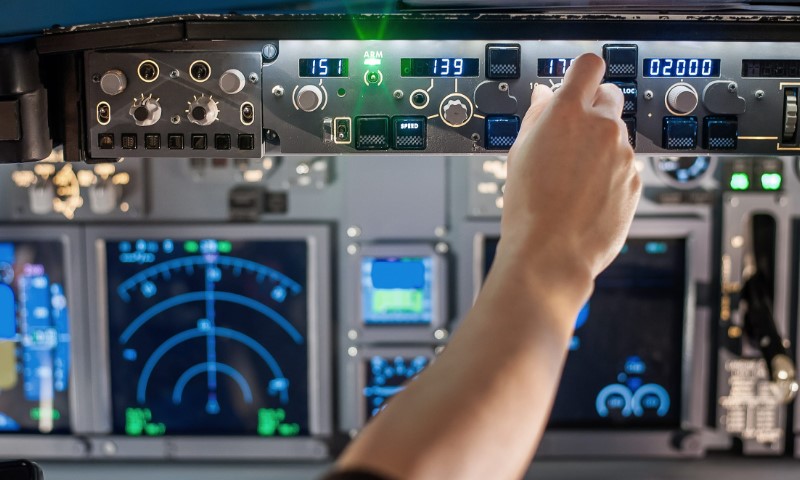
Dreamliner systems use a common data network (CDN) to distribute critical flight information.
Normally, monitoring functions help verify that network messages are sufficiently current.
After 51 days of continuous operation, the CCS could lose its stale-data monitoring capability. Combined with a CDN switch failure, outdated information could then be accepted as valid.
Potential consequences identified by the FAA included:
| Potential issue | What could happen | Possible consequence |
| Misleading attitude information | Both pilots could receive incorrect readings. | Aircraft orientation could be misrepresented. |
| Incorrect altitude readings | Primary flight displays could show inaccurate data. | Pilots could misjudge the aircraft’s altitude. |
| Misleading airspeed | Both pilots could see incorrect airspeed readings. | No associated failure indication might alert them. |
| Lost safety warnings | Stall or overspeed alerts could become unavailable. | Pilots might not receive critical warnings. |
| Incorrect engine readings | Displays could provide misleading engine data. | Pilots could misjudge the operating condition of both engines. |
Such scenarios could reduce a flight crew’s ability to maintain safe flight and landing conditions.
Importantly, losing stale-data detection did not automatically mean every cockpit display would become incorrect after 51 days.
FAA requirements called for repetitive electrical power cycling according to Boeing’s maintenance instructions.
Earlier Dreamliner software concerns had also involved outdated flight plans unexpectedly becoming active in navigation systems.
Being able to distinguish current information and obsolete information is essential when computers assist with flying an aircraft.
In 2015, the problem involved computers that could not safely keep counting indefinitely. In 2020, computers risked losing track of how old their information was.
Why Rebooting a Boeing 787 Works

Restarting a computer clears certain temporary operating states and initializes software processes again.
Depending on the system, it can also reset counters that measure elapsed operating time.
Both Dreamliner vulnerabilities depended on equipment operating continuously for an extended period.
Interrupting electrical power prevented the affected systems and their software counters or monitoring states from reaching the conditions associated with the identified failures.
Why Would an Aircraft Stay Powered for So Long?
Landing an aircraft does not necessarily mean its electrical systems are completely switched off.
Commercial airplanes may receive power through external ground connections while parked at airports.
During that time, airline personnel can perform maintenance, prepare upcoming flights, and operate onboard equipment without completely shutting down every system.
As a result, certain aircraft computers can accumulate substantial continuous operating time across numerous flights.
A scheduled restart interrupts that accumulation.
For the 2015 generator-control problem, the required shutdown lasted at least 15 seconds. Maintenance personnel did not even need to disconnect the aircraft’s two onboard batteries.
Fifteen seconds without electrical power was enough to reset the affected systems and interrupt the continuous operating period responsible for the software problem. A remarkably short procedure, considering the potential consequences of skipping it.
Crucially, FAA-required power cycling was a ground maintenance procedure, not an instruction for pilots to switch off critical systems during flight.
A Temporary Workaround Is Not a Permanent Repair
Restarting equipment can prevent a known software defect from producing its dangerous consequences.
However, doing so does not necessarily correct the programming error.
For the 2015 generator-control vulnerability, updated software eventually provided a more permanent solution.
On November 20, 2018, a new FAA directive took effect, requiring updated generator control unit software on affected Boeing 787-8 and 787-9 aircraft.
Unlike periodic power cycling, the software update addressed the defect responsible for the original 248-day vulnerability. Airlines finally had a required corrective action that did more than reset the clock.
A reboot can reset the conditions that produce a malfunction. Corrected software addresses the underlying defect.
Confusing those two approaches would be a particularly expensive mistake in aviation.
What These Incidents Reveal About Boeing and FAA Oversight
Both incidents demonstrate how software can create safety risks even when physical aircraft components are functioning as designed.
Generator hardware did not need to break for electrical power to be threatened. Similarly, cockpit displays did not need to malfunction physically to present potentially misleading information.
Programming errors alone could create dangerous operating conditions.
Such problems also explain why aviation regulators issue mandatory airworthiness directives instead of relying on manufacturers or airlines to voluntarily adopt recommended changes.
Airworthiness directives identify unsafe conditions and establish required corrective actions.
FAA Oversight Tightened Again in 2022
In February 2022, the FAA announced tighter oversight of Boeing’s 787 production and certification process.
Federal inspectors would retain responsibility for issuing airworthiness certificates for newly manufactured Dreamliners, rather than allowing designated Boeing employees to handle those approvals under normal delegated arrangements.
Unlike the earlier software incidents, the 2022 decision concerned manufacturing-quality problems.
Issues included unacceptable gaps between fuselage panels, which contributed to interruptions in Dreamliner deliveries.
By the end of December 2021, Boeing had 110 manufactured 787 aircraft awaiting certification.
Production continued at only two or three aircraft per month while Boeing addressed outstanding problems.
Although unrelated to the reboot requirements, those manufacturing concerns reinforced the importance of independent inspections, software testing, and consistent quality control.
Aircraft safety depends on more than properly functioning engines and structural components. Computer systems and manufacturing procedures must also satisfy strict requirements.
Closing Thoughts
Twice within five years, Boeing 787 software vulnerabilities prompted the FAA to require airlines to periodically cycle aircraft electrical power.
One issue involved a 248-day software counter overflow that could threaten electrical power. Another involved a 51-day operating limit that could compromise the reliability of critical cockpit information under certain failure conditions.
Both directives addressed identified hazards before those scenarios could develop into serious incidents.
Neither meant Dreamliners routinely experienced complete electrical failures or displayed incorrect flight information after the specified periods.
Instead, regulators required preventive maintenance while the relevant software issues were addressed.