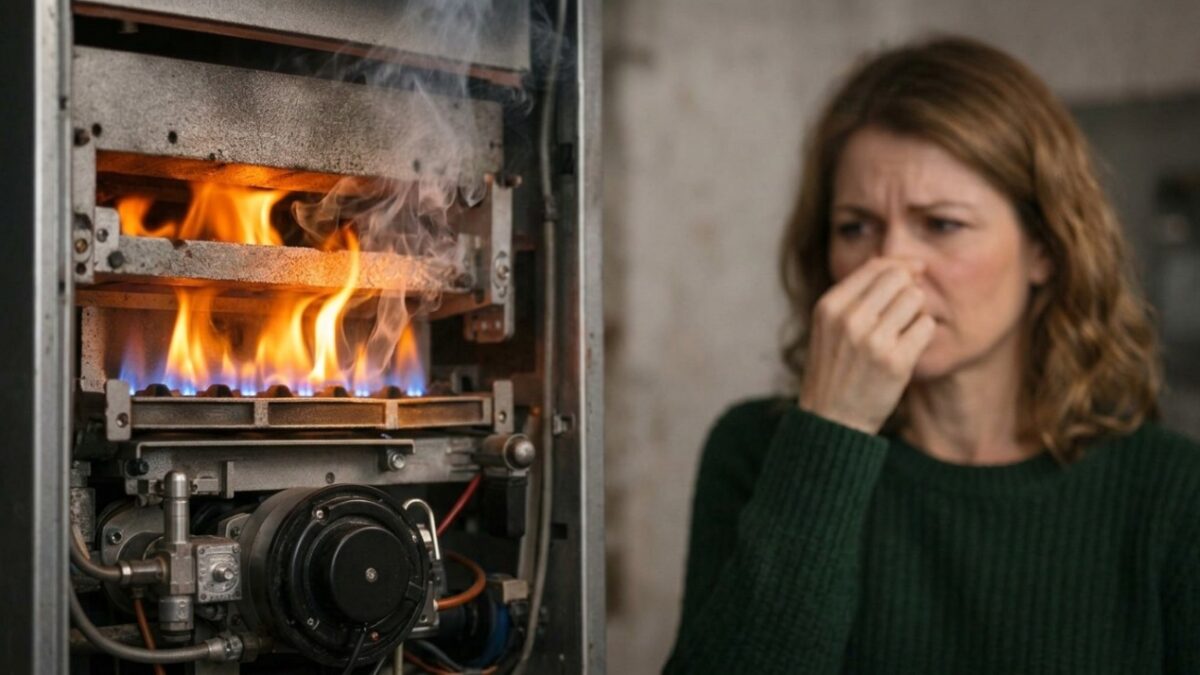
It’s the first cold morning of the season. You turn on the furnace, expecting warm air, and suddenly your house smells like something is burning.
Wonderful. Your furnace has one job: heat the house, preferably without making everyone suspect a fire.
Fortunately, if your furnace smells like burning the first time you turn it on, accumulated dust is usually responsible. Dust settles on heating components during warmer months and produces a temporary odor when those components heat up.
However, not every burning smell deserves the same relaxed response.
Why Does Your Furnace Smell Like Burning When You First Turn It On?
During spring and summer, dust gradually collects on the furnace’s heat exchanger, burners, and other internal components.
Once heating season begins, those components become hot enough to burn off accumulated dust, releasing an odor that travels through the ventilation system.
Your furnace has spent months collecting dust. Apparently, its first order of business is making sure everyone knows.
According to American Standard’s explanation of furnace burning smells, this is common during the first heating cycle, particularly in regions where furnaces sit unused for several months.
A mild, dusty odor that quickly fades generally indicates normal seasonal startup.
Other Possible Causes of the Burning Smell
Dust isn’t the only suspect.
| Possible Cause | Why It Produces a Burning Smell |
| Pet hair and debris | Hair trapped in filters or ductwork can produce an unpleasant burning-hair odor when heated. |
| Clogged air filters | Restricted airflow can cause excessive furnace temperatures and contribute to overheating. |
| Foreign objects | Plastic toys, wrappers, or rubber objects lodged near heating components can produce unusual burning odors. |
| New furnace components | Protective coatings, lubricants, and manufacturing residues may produce temporary odors during initial operation. |
How Long Should the Burning Smell Last?
A normal burning-dust smell often disappears within a few minutes, although some initial startup odors can linger for several hours.
American Standard recommends turning off the furnace and contacting an HVAC professional if the burning smell persists longer than an hour or if the furnace starts blowing cold air.
However, that recommendation is a conservative troubleshooting threshold, not a scientific boundary separating safe operation and danger.
An odor lasting 61 minutes isn’t automatically hazardous, just as one lasting five minutes isn’t automatically harmless.
Pay attention to how the smell behaves.
A faint, dusty odor that steadily weakens is generally less concerning than one that becomes sharper or stronger.
Repeated burning smells during subsequent heating cycles also deserve investigation.
Most importantly, never wait for an hour to pass if you notice burning plastic, electrical odors, or smoke.
What Should You Do If Your Furnace Smells Like It’s Burning?
Identifying the source requires a little detective work. Fortunately, several useful checks don’t involve opening the furnace or touching electrical components.
Step 1 – Identify the Smell
Start by determining exactly what you’re smelling.
Does it resemble warm dust, burning hair, melting plastic, or overheated electrical equipment?
A mild dust odor that steadily fades during initial startup can generally be monitored. Strong, unfamiliar, or worsening smells require shutting down the system.
Location matters, too.
Consider a furnace producing a plastic-like odor after months of inactivity.
If the smell is noticeably stronger near one bedroom register, inspecting that accessible vent for a fallen plastic wrapper or small toy may help identify the cause.
Finding an object can explain a localized smell, but it doesn’t automatically prove that the furnace itself is safe.
Step 2 – Check the Air Filter
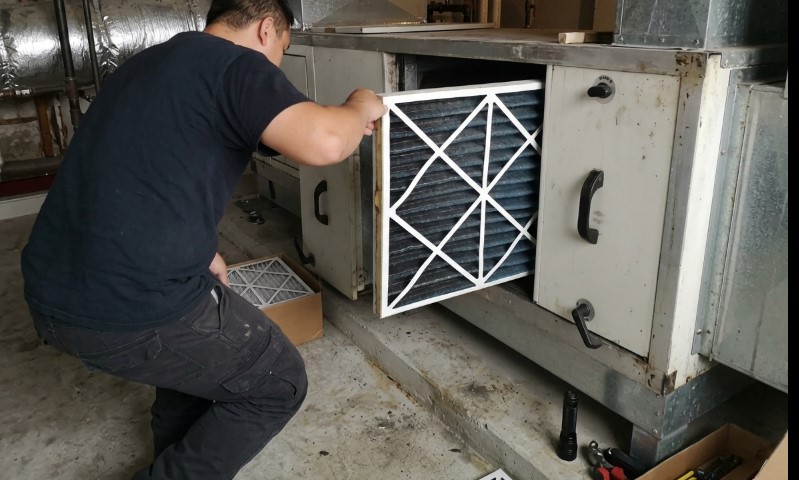
Turn off the furnace before inspecting its filter.
If the filter is visibly dirty or clogged, replace it with the appropriate size and type recommended by the manufacturer.
Why does this matter?
A clogged filter restricts airflow across the heat exchanger, allowing temperatures inside the furnace to rise excessively.
Modern gas furnaces generally include a high-temperature limit switch, a safety device designed to interrupt burner operation when temperatures become too high.
According to Carrier’s furnace troubleshooting guidance, restricted airflow caused by a dirty filter can trigger this protection.
One particularly useful clue is a furnace that starts heating, shuts its burners off prematurely, and continues blowing cooler air .
Repeated shutdowns may indicate overheating caused by restricted airflow, although other mechanical or control problems can produce similar symptoms.
Replacing a dirty filter may correct an airflow problem, but it cannot repair damaged wiring, a failing blower motor, or a defective component.
If the furnace repeatedly shuts down or produces an electrical burning odor, leave it off and arrange professional inspection. Never bypass or reset safety devices to force continued operation.
Step 3 – Inspect Vents and the Furnace Area
Look for visible obstructions around accessible registers and the furnace.
Check for pet hair, dust buildup, plastic wrappers, or small objects that may have fallen into floor vents.
Remove loose debris only when safely accessible and the system is off. Avoid reaching into internal furnace components or dismantling equipment.
Next, inspect the surrounding area.
Cardboard boxes, clothing, cleaning supplies, and other combustible materials should never be stored against heating equipment. Follow manufacturer clearance requirements.
If the odor continues or its source cannot be identified, leave the furnace off and contact a qualified HVAC technician.
When Is a Furnace Burning Smell Dangerous?
@handyneighborkc That first heat cycle of the season can smell weird — but there’s a difference between dusty and dangerous. #HeatingTips #FurnaceTips #HomeSafety #HandyNeighborKC ♬ original sound – Handy Neighbor | Home Tips.
Some odors suggest considerably more serious problems than seasonal dust accumulation.
Knowing which warning signs matter can prevent an unpleasant smell from becoming a dangerous situation.
For suspected electrical or mechanical overheating, shut off the furnace and arrange professional inspection.
If you suspect a natural gas leak, evacuate immediately.
According to Enbridge Gas safety instructions, occupants should avoid using electrical switches, phones, appliances, or anything that could produce a spark indoors.
Contact the gas utility or emergency services once safely outside. Do not attempt to locate the leak yourself.
Visible fire or smoke also requires evacuation and emergency assistance.
A carbon monoxide alarm demands immediate action. Leave the building, move to fresh air, and call 911. Do not reenter until emergency responders confirm it is safe.
Importantly, carbon monoxide has no smell.
As the CDC explains in its furnace safety guidance, gas- and oil-burning furnaces can produce this poisonous gas.
A furnace can therefore create a dangerous condition without producing any recognizable odor.
How Can You Prevent Furnace Burning Smells?
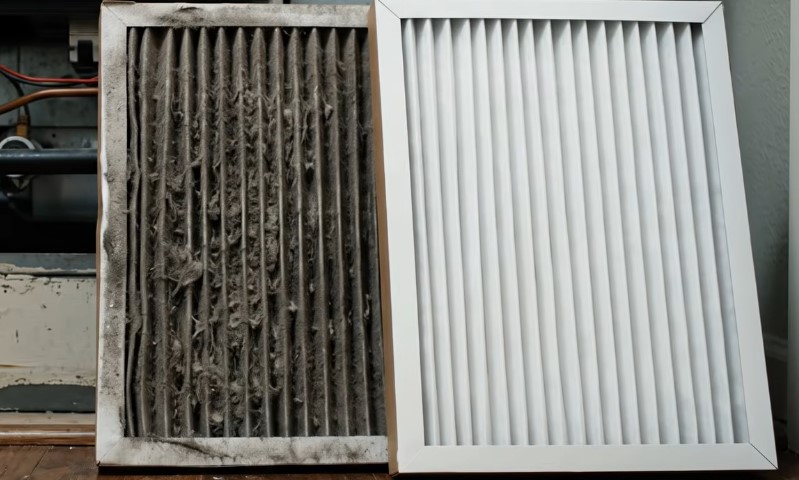
You cannot completely eliminate the possibility of a dusty startup smell, but routine maintenance can reduce its likelihood and help identify developing problems.
A few practical habits make a difference:
| Maintenance Task | What to Do | When to Do It |
| Inspect air filters | Check for dust buildup and replace according to manufacturer instructions. | Before heating season and more often if you have pets or heavy dust. |
| Keep vents clean | Vacuum registers, remove debris, and keep airflow unobstructed. | Regularly, especially before winter. |
| Maintain proper clearance | Keep cardboard, clothing, and combustible materials away from the furnace. | Year-round. |
| Schedule professional maintenance | Have a technician inspect the furnace and identify potential problems. | Annually, preferably in late summer or early fall. |
During maintenance, a qualified technician can inspect heating components, examine electrical connections, check airflow, and identify potential mechanical problems.
Annual professional servicing is also recommended by the CDC for fuel-burning heating systems.
Additionally, install working carbon monoxide alarms near sleeping areas and maintain them according to manufacturer instructions.
An inspection before winter is considerably easier than discovering a problem when temperatures drop and the house has other plans.
A Little Dust Is Normal, but Persistent Burning Isn’t
A furnace that smells like burning during its first heating cycle is often simply burning off accumulated dust.
If the odor is mild and quickly disappears, seasonal dust is the likely explanation.
Persistent, worsening, or unusually sharp smells tell a different story.
Checking filters and accessible vents may reveal a simple problem, but electrical and mechanical diagnosis belongs to qualified professionals.