Your furnace starts, blows warm air for a few minutes, shuts off, and then starts again.
For a machine designed to heat your home, it seems remarkably committed to taking breaks.
Frequent starts and stops can indicate furnace short cycling, a problem commonly caused by:
- Restricted airflow
- Thermostat issues
- Overheating
- Malfunctioning components
Instead of completing a normal heating cycle, your furnace shuts down early and repeatedly attempts to restart.
Figuring out why requires paying attention to one important detail: How long does your furnace run before shutting off?
A shutdown within seconds suggests a different problem than one occurring after several minutes.
Identifying that pattern can help narrow the possible causes before you call an HVAC technician.
Is Your Furnace Actually Short Cycling?
Furnace short cycling occurs when your heating system repeatedly turns off before completing a normal heating cycle, often leaving your home below the thermostat’s target temperature.
According to Carrier’s furnace troubleshooting information, updated in October 2026, heating cycles lasting less than 5 to 10 minutes can indicate short cycling.
However, cycle length alone does not confirm a malfunction. Many furnaces typically run for at least seven minutes, but actual operating times depend on the equipment, thermostat settings, and heating demand.
During extremely cold weather, frequent cycling can be normal as your home loses heat more quickly. Some systems also operate in shorter cycles during mild weather.
Repeated shutdowns before reaching the thermostat setting are a stronger warning sign than cycle length alone.
Pay attention to what happens during each cycle:
| What Your Furnace Does | What It May Indicate |
| Burners ignite but shut off within seconds | Dirty flame sensor or ignition problem |
| Burners run for several minutes, then stop while the blower continues | Overheating or high-limit switch activation |
| Entire system shuts off before reaching the set temperature | Thermostat problem or control issue |
Furnace heats the area near the thermostat quickly, then shuts off Possible oversized furnace
Persistent short cycling can cause uneven indoor temperatures, higher heating bills, and unnecessary wear on ignition systems, motors, and other components.
Short cycling can also leave you with a furnace blowing cold air. If the burners shut off while the blower continues running, air may keep circulating without being heated.
A brief cooling period can be normal, but repeated cold airflow before your home reaches the target temperature deserves investigation.
Repeated overheating can also damage the heat exchanger, turning an inconvenient heating problem into a potentially expensive repair.
Why Does Your Furnace Keep Turning On and Off?
View this post on Instagram
Several problems can interrupt a heating cycle.
Some are simple maintenance issues, while others involve safety controls that shut down the furnace when operating conditions become unsafe.
A Dirty Air Filter Is Restricting Airflow
A clogged air filter is one of the most common causes of furnace short cycling.
Your furnace heats air inside a heat exchanger while a blower pushes household air across its exterior surfaces. Adequate airflow carries that heat into your rooms and prevents excessive temperatures inside the equipment.
When a dirty filter restricts airflow, heat can accumulate inside the furnace. Eventually, a high-limit safety switch may shut off the burners to prevent overheating.
Once the equipment cools, it may attempt another heating cycle. If the airflow restriction persists, the same shutdown can happen again.
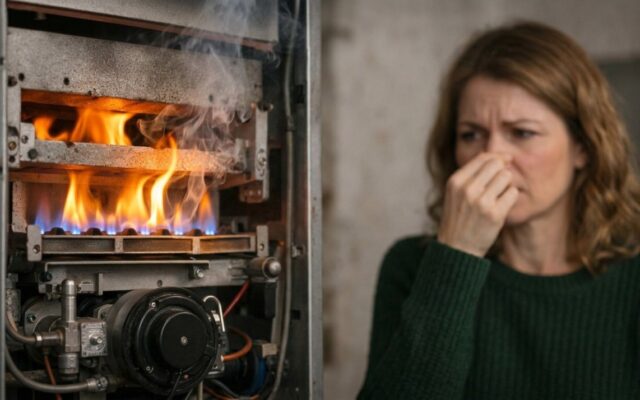
Overheating can sometimes produce another warning sign: your furnace smells like burning. A mild dusty odor during the first heating cycle of the season can be normal, but persistent burning smells, particularly alongside repeated shutdowns, need attention.
Strong electrical or melting-plastic odors call for switching off the system and arranging professional inspection.
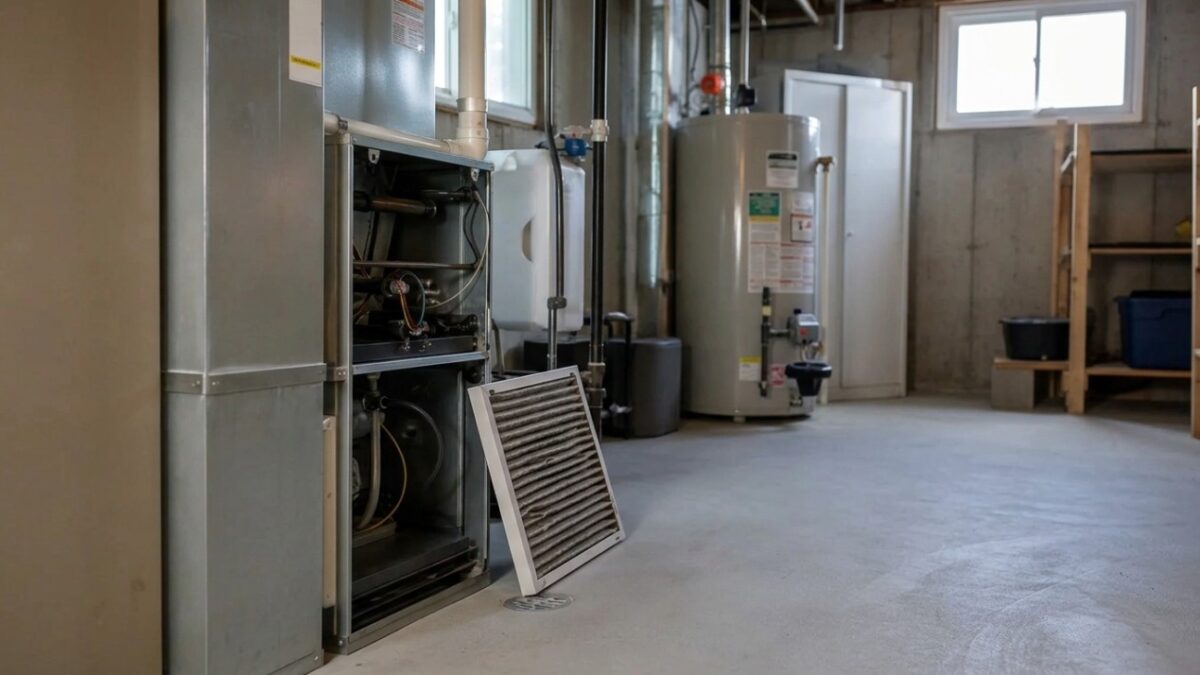
What to check: Inspect your furnace filter for accumulated dust and debris. Replace it if dirty, using the correct filter size and airflow direction.
Standard 1-inch filters generally need replacement every 1 to 3 months, depending on household conditions, filter specifications, and system usage. Checking them monthly helps catch restrictions before they cause problems.
Avoid operating your furnace without a filter. Doing so can allow dust to accumulate on internal components.
Blocked Vents Are Making the Furnace Overheat
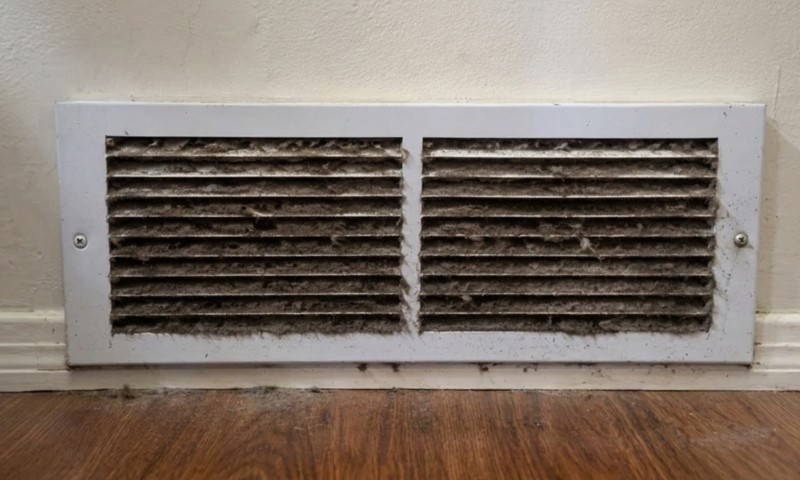
Closed registers and blocked return vents can create airflow problems even when your furnace filter is clean.
Supply registers deliver heated air into your rooms, while return grilles allow household air to circulate back toward the furnace.
Furniture covering a return grille, a rug blocking an opening, or several closed registers can interfere with circulation.
Reduced airflow can raise internal furnace temperatures enough to activate the high-limit switch.
What to check: Open supply registers throughout your home and move furniture, curtains, and other obstructions away from return grilles.
For example, consider a furnace that runs for four minutes before its burners shut off, while the blower continues operating. A heavily clogged filter and several closed bedroom registers could be restricting airflow.
Replacing the filter and reopening the registers may restore adequate circulation and allow the furnace to complete its heating cycle.
If the problem continues after those changes, an HVAC technician should measure airflow and check for overheating rather than assuming the filter was the only cause.
Persistent airflow problems may involve undersized ductwork, damaged ducts, or an improperly operating blower.
Ductwork deserves attention, too. ENERGY STAR estimates that 20% to 30% of the air circulating through duct systems in a typical house escapes through leaks and poorly connected sections.
Such losses help explain why some rooms never warm up properly.
Duct leakage does not automatically cause short cycling, but damaged or poorly designed ducts can also contribute to airflow problems that require professional testing.
The Thermostat Is Sending the Wrong Signals
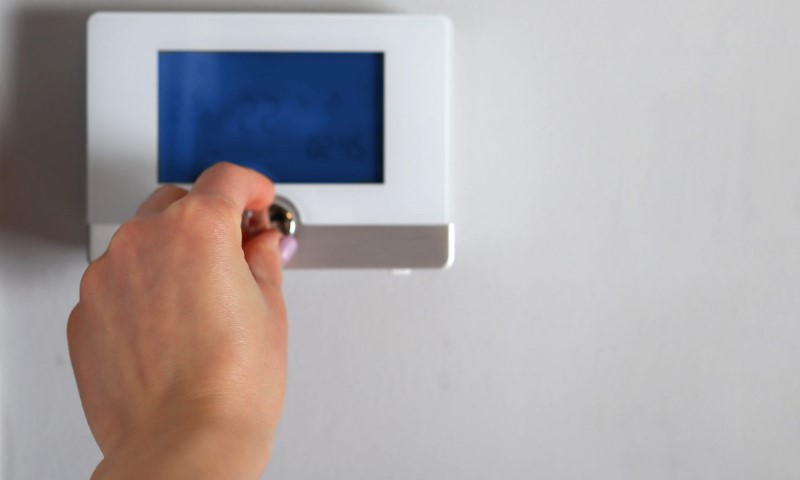
Your furnace relies on its thermostat to determine when heating should start and stop. Incorrect temperature readings or faulty control signals can interrupt that process.
Common thermostat problems include weak batteries, loose wiring, incorrect cycle settings, and poor placement.
A thermostat installed near a sunny window, heating vent, or heat-producing appliance may detect warmth before the rest of your home reaches the desired temperature.
As a result, your furnace shuts off while rooms farther away are still cold.
Drafts can create the opposite problem, causing the thermostat to request heat more frequently than necessary.
What to check: Confirm that the thermostat is set to heating mode and that its target temperature is above the current room temperature. Replace weak batteries and check that its displayed temperature is reasonable.
If short cycling began after installing a smart thermostat, incorrect equipment configuration or wiring may be responsible.
Some thermostats also have adjustable heating cycles-per-hour settings. Incorrect settings can cause excessive cycling, although changing them without checking equipment compatibility may introduce additional problems.
A qualified technician can verify wiring, settings, and temperature readings.
A Dirty Flame Sensor Is Shutting Off the Burners
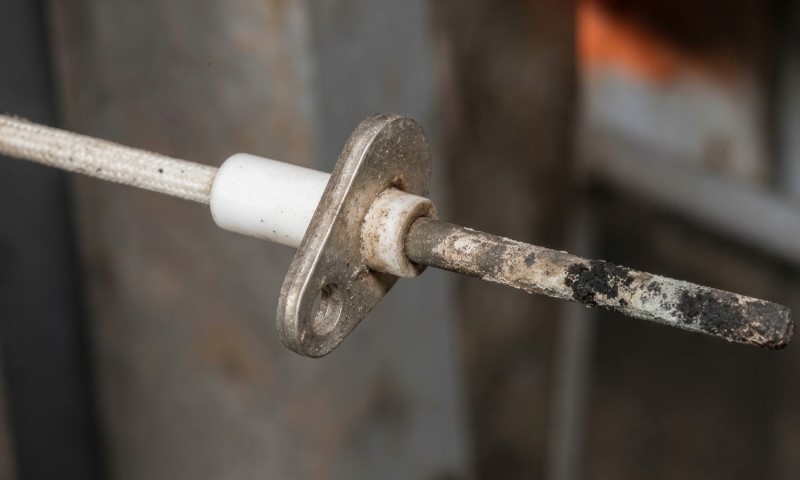
A flame sensor performs a simple but important task: confirming that the burners actually ignited.
In many modern gas furnaces, a metal flame-sensing rod uses a small electrical signal to confirm flame presence.
If residue interferes with that signal, the control board may interpret the situation as a failed ignition and close the gas valve.
A distinctive clue is that the burners ignite normally but shut off within a few seconds.
Your furnace may attempt ignition again several times before entering a temporary safety lockout.
An ignition sequence that repeatedly fails within seconds is less consistent with a clogged air filter, which generally causes overheating after the furnace has operated for some time.
Dirty flame sensors, faulty ignition components, wiring problems, and control-board faults can produce similar symptoms.
Professional inspection can identify the actual failure. Cleaning or replacing flame-sensing components should be handled by a qualified technician rather than attempting to remove burner assemblies yourself.
A Blocked Exhaust or Condensate Drain Is Triggering a Shutdown
@handsome.or.handy My fifth furnace of the week, fixing a clogged exhaust line. #HandsomeOrHandy #hvac #winterfun ♬ Pop Rocks – Shryne & Slip.stream
Gas furnaces need properly functioning intake and exhaust systems to support combustion and safely discharge combustion gases.
Snow, ice, leaves, animal nests, and other obstructions can interfere with venting.
Many modern furnaces use pressure switches to verify that the combustion-air and exhaust system is operating correctly. If required conditions are not met, furnace controls may prevent ignition or interrupt operation.
High-efficiency condensing furnaces have another possible trouble spot: condensate drainage.
These furnaces produce water during normal operation. A blocked drain line, failed condensate pump, or backed-up condensate trap can interrupt heating, depending on the furnace’s safety controls.
What to check: Inspect accessible exterior vent openings for visible snow, ice, leaves, or other obstructions.
You can also look for standing water, kinked drain hoses, or unusual gurgling noises near a high-efficiency furnace.
Do not dismantle vent pipes, disconnect pressure-switch tubing, or bypass safety controls.
A venting failure can create dangerous operating conditions, including possible exposure to combustion gases.
The Furnace Is Too Large for Your Home
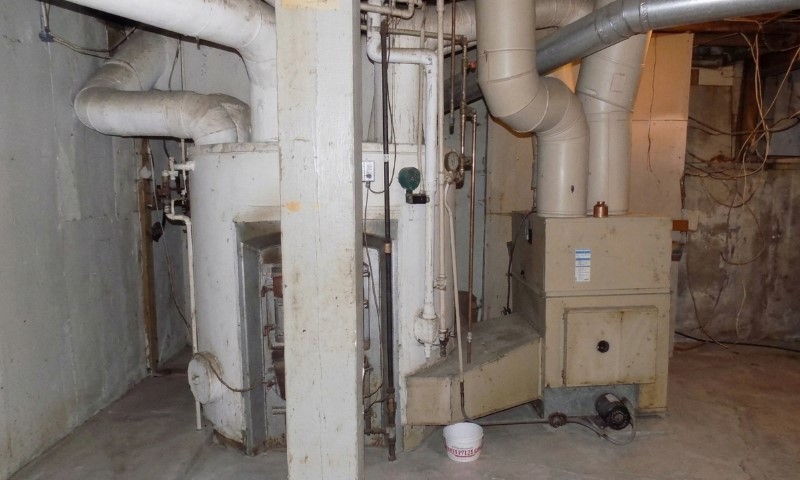
More heating capacity sounds useful until your furnace warms the area around the thermostat too quickly and shuts down before other rooms become comfortable.
An oversized furnace may deliver heat faster than your home needs it, creating frequent starts and stops.
One clue is a problem that has existed since the equipment was installed.
Another possibility arises after major improvements to insulation, windows, or air sealing. Reduced heat loss can lower your home’s heating demand, making existing equipment larger than necessary for the updated conditions.
However, oversized equipment does not always produce short cycles, and short cycling alone cannot establish that a furnace is oversized.
Proper sizing requires a heating-load calculation that accounts for the building’s insulation, dimensions, air leakage, windows, and local climate.
The U.S. Department of Energy’s heating and cooling guidance supports evaluating equipment efficiency and appropriate system design. Industry-recognized calculations, including ACCA Manual J, provide a more reliable sizing method than relying solely on square footage.
Changing thermostat settings might reduce some unnecessary cycling, but it cannot fully correct an equipment-sizing problem.
Summary
Furnace short cycling is a symptom, not a diagnosis.
A dirty filter, malfunctioning thermostat, or failed safety component can all produce the same frustrating pattern.
Timing provides the most useful starting clue.
Burners shutting off within seconds may indicate flame-sensing or ignition trouble, while shutdowns after several minutes with the blower still operating may point toward overheating.
Start with accessible airflow and thermostat checks.
If your furnace continues its repeated attempts at heating, a qualified HVAC technician can identify the cause and restore normal operation without unnecessary parts replacement.