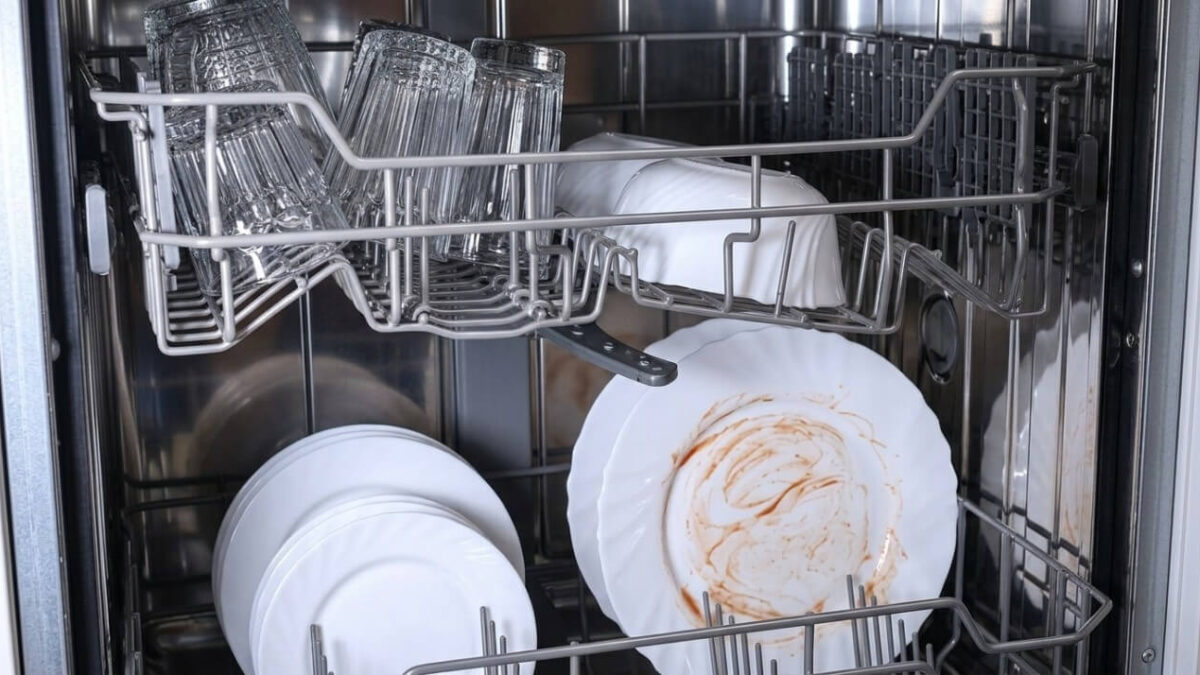
Cycle complete. Door opens. Plates still have dried food attached, a glass looks cloudy, and a frying pan has somehow come out almost as greasy as it went in.
Finishing a cycle only proves that the dishwasher completed its program. Good cleaning still depends on hot water reaching the dishes, detergent dissolving correctly, debris getting trapped by the filter, and dirty water leaving the machine.
Clues are sitting right on the rack.
Food, grease, white residue, or one consistently dirty section can point toward different causes, which makes the mess more useful than it first appears.
Start With the Way the Dishes Are Dirty
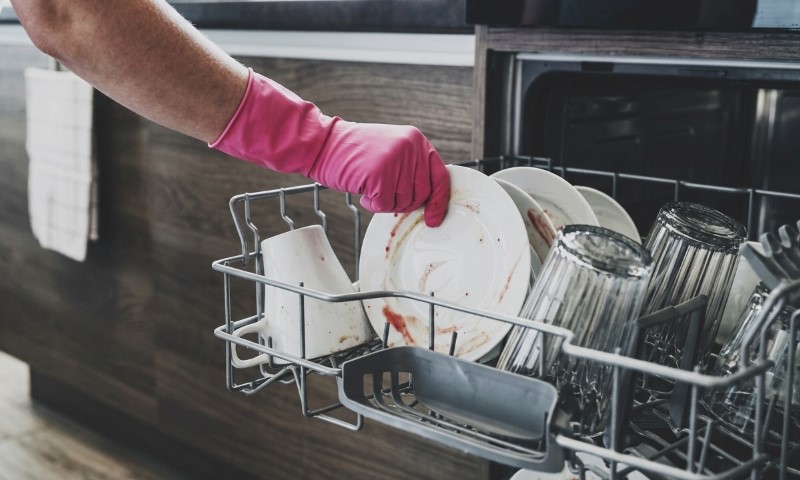
Food still stuck to plates often points toward poor water circulation.
Crowded racks, clogged spray-arm holes, or a dirty filter can all reduce how much water reaches each surface.
Greasy dishes shift suspicion toward water temperature and detergent. Cool water may struggle with fats, while weak or damp detergent may not clean as effectively as expected.
White spots or cloudy glassware suggest a different trail. Hard-water minerals, unsuitable detergent, or low rinse aid can leave visible residue even when food has been removed.
Only one rack or one corner staying dirty is especially useful evidence.
Check the spray arm responsible for that area and look for a pan, cutting board, or tall utensil blocking its path.
Patterns matter here. A machine that fails everywhere may have a broader problem, while one dirty zone often points to one blocked water path.
Check the Loading, Filter, and Spray Arms
If dirty dishes are coming out in the same condition they went in, start with the parts that actually control where the water goes.
A crowded rack can block the spray, a clogged filter can choke circulation, and a jammed spray arm can leave half the load sitting outside the action.
Before blaming the pump or calling for repair, check these three suspects first.
Loading
Give water room to move. Plates should have space between them, bowls should not sit tightly inside each other, and large cookware should not shield everything behind it.
Scrape off large food scraps before loading. Big pieces can clog the filter or interfere with spray performance.
Modern dishwashers generally do not need every plate rinsed spotless first, although light pre-rinsing can help some older machines.
Watch tall items near the spray arms. A saucepan can look perfectly innocent while quietly stopping an arm after half a turn. Dishwashers are good at spraying water, but they have not learned to spray through cookware.
Modern dishwashers also work with less water than you might expect. A current ENERGY STAR-certified standard model is limited to 3.2 gallons per cycle.
That makes good circulation important. Block one spray path, and there is not a hidden bathtub of extra water waiting underneath to rescue the load.
Filter
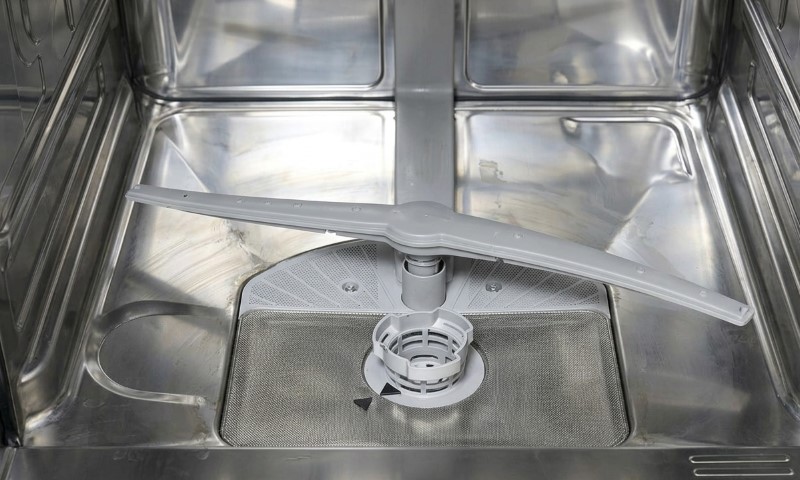
Pull out and inspect the filter according to the appliance manual. Food particles, grease, and sludge can collect there and interfere with circulation.
A blocked filter can also allow dirty water or loose debris to stay in the wash system. Resulting symptoms may include food redeposited on dishes, poor cleaning, or unpleasant residue near the bottom of the tub.
Filter schedules vary by design, but some removable-filter systems call for cleaning about once a month, or every two weeks when the dishwasher runs daily. Manufacturer instructions still take priority.
A filter that has not been touched since last season has earned a place near the top of the suspect list.
Spray Arms
Spin each accessible spray arm by hand and make sure it moves freely. Next, inspect the small holes for food particles, grease, or mineral deposits.
Blocked openings reduce water pressure and coverage.
One clogged section can explain why glasses on one side look clean while plates three inches away appear to have missed the event entirely.
Where the manufacturer allows it, accessible openings can be cleared gently with a wooden toothpick or a small soft brush.
Avoid forcing hard or sharp objects into plastic openings.
Check the Detergent and Water Temperature
@melissadilkespateras #stitch with @Josh Godfrey dishwasher troubleshooting #cleantok #dishes #appliances ♬ original sound – Laundrytok | Melissa Pateras
Use fresh detergent and keep it stored somewhere dry. Powder or tablets that have absorbed moisture can lose cleaning power before they ever reach the machine.
Check the dispenser too. A large plate or utensil can block the door, leaving detergent trapped inside instead of releasing during the wash.
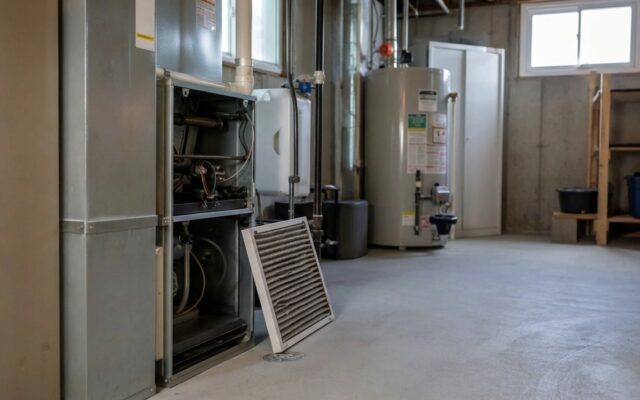
Detergent choice also matters when household water is hard. Products with added water-softening capability may perform better under those conditions. Dosage matters as well. More detergent is not automatically more effective, so follow the dishwasher and detergent maker’s instructions.
Water temperature is another clue you can actually measure. Around 120°F, or 49°C, is a common incoming-water benchmark, while some manufacturer guidance allows inlet temperatures up to 150°F, or about 66°C.
Check the appliance manual before changing water-heater settings. A kitchen thermometer at the nearest hot tap can tell you if the dishwasher is starting with properly hot water or being handed a lukewarm problem and expected to sort it out.
Water that enters too cool may leave grease behind and reduce detergent performance. Running the kitchen faucet until hot just before starting a cycle can help the first fill begin at a more useful temperature.
Make Sure You’re Using the Right Cycle
Quick and light programs have a job, but heavily soiled cookware is not always that job.
Pots, pans, baked-on food, and greasy loads usually need a normal, heavy-duty, or intensive program recommended by the manufacturer.
Short cycles often use less time and may use different wash behavior, so expecting identical results can turn dinner cleanup into an unfair test.
Run one normally loaded batch on an appropriate normal or heavy setting. If cleaning improves, evidence points toward cycle selection rather than a serious hardware problem.
If the Dishes Are Cloudy, Look at Hard Water
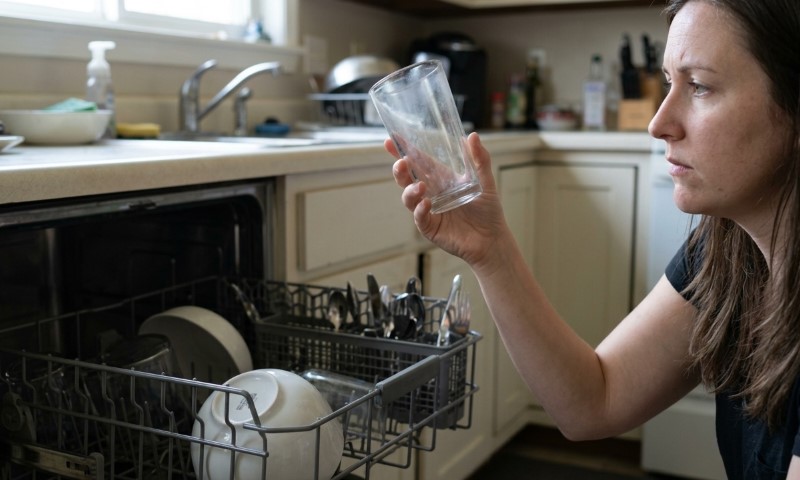
White spotting, cloudy glassware, and mineral deposits around internal parts can all point toward hard water.
Check the rinse-aid level and any built-in water-softening system your machine uses. Detergent should also match local water hardness as closely as possible.
Mineral buildup can create two symptoms at once. Residue may collect on glasses while deposits narrow spray-arm openings and weaken water coverage.
Cloudy dishes and poor spraying can therefore share the same cause.
If None of That Works, Check Drainage and Mechanical Problems
Noticeable standing water after a completed cycle calls for attention. Dirty water that cannot leave properly can undermine everything that happened earlier in the wash.
Inspect accessible drain areas for trapped food. Check the visible drain hose for obvious kinks or blockages.
Some installations also use an air gap, which can become blocked. A newly installed garbage disposal can create another specific problem if its dishwasher knockout plug was never removed.
Basic checks that produce no improvement make mechanical faults more plausible.
Possible trouble spots include the circulation pump, water inlet valve, wash motor, or damaged spray components.
Professional service becomes sensible when water stays in the tub after every cycle, spray arms still do not operate after cleaning, the machine appears to fill incorrectly, unusual pump noises begin, cleaning performance suddenly drops, or leaks and electrical concerns appear.
A Simple Test Load Can Narrow It Down
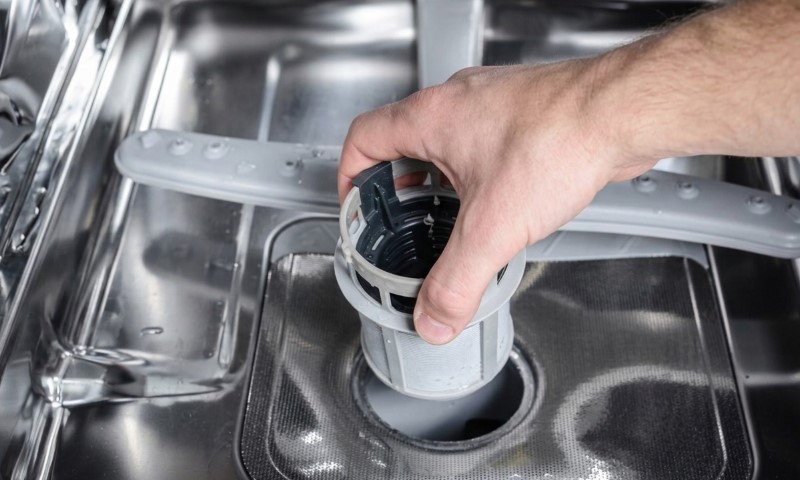
Before booking a repair, run one controlled test:
- Scrape away large food scraps and clean the filter.
- Check that spray arms are clear and can rotate freely.
- Load dishes with enough space for water to reach exposed surfaces.
- Use fresh detergent suited to local water conditions.
- Make sure hot water is available at the kitchen faucet.
- Run a normal or heavy cycle suited to the load.
A clean result is useful evidence. Loading, routine maintenance, detergent, water temperature, or cycle choice becomes more likely than a major component failure.
Another dirty result narrows the mystery in the other direction.
Drainage, filling, circulation, or an internal mechanical problem calls for closer inspection.
Follow the Clues in Order
Troubleshooting works best in a simple sequence:
- Dirty-dish pattern
- Loading
- Filter
- Spray arms
- Detergent
- Temperature
- Cycle
- Hard water
- Drainage
- Mechanical fault
Reaching the end of a cycle proves only that the program ran. It does not prove that hot water reached every plate, detergent worked properly, or yesterday’s pasta successfully made it down the drain.
Start with what the dishes are telling you. Quite often, their mess is specific enough to point toward the next check.