
Backing out of a driveway goes normally until the steering wheel reaches a sharper angle. Suddenly, there it is. Click-click-click.
Parking lots have an impressive ability to expose noises a car hid perfectly well during the rest of the trip. Slow, sharp turns increase steering angle and place extra load on CV axles, steering joints, and front suspension parts. Wear that stays quiet while cruising straight can become quite talkative during a tight U-turn.
A car may behave perfectly well at normal speed, then lodge a formal complaint about entering a parking space.
Several parts can cause clicking during a turn, so hearing one does not automatically mean a suspension or steering failure. Rhythmic clicking tied closely to wheel rotation puts a worn outer CV joint near the top of the suspect list.
Sound pattern is the first useful clue.
Start With the Sound – Repeated Clicking or One Pop?
Listen closely during a slow, tight turn. If each wheel rotation produces another click and the clicking gets fast er as the car moves faster, a CV joint becomes a strong suspect.
Suspicion increases when the noise gets louder near full steering lock or during light acceleration through the turn.
Manufacturer repair data backs up that combination of clues. Toyota issued a service bulletin for certain 2015 to 2021 Corollas after clicking was reported during turns greater than 90 degrees while accelerating at full steering lock.
Diagnosis in that bulletin specifically directs technicians to check the front drive shaft. It does not make 90 degrees some universal magic number, but it shows why a tight turn plus throttle is such a useful test for axle-related clicking.
Direction can offer another clue. Clicking that becomes noticeably louder during a left turn can often point toward greater wear at the right outer CV joint. Louder noise during a right turn can point toward the left side. Load changes during cornering can make one damaged joint much easier to hear.
A single pop or clunk tells a somewhat different story.
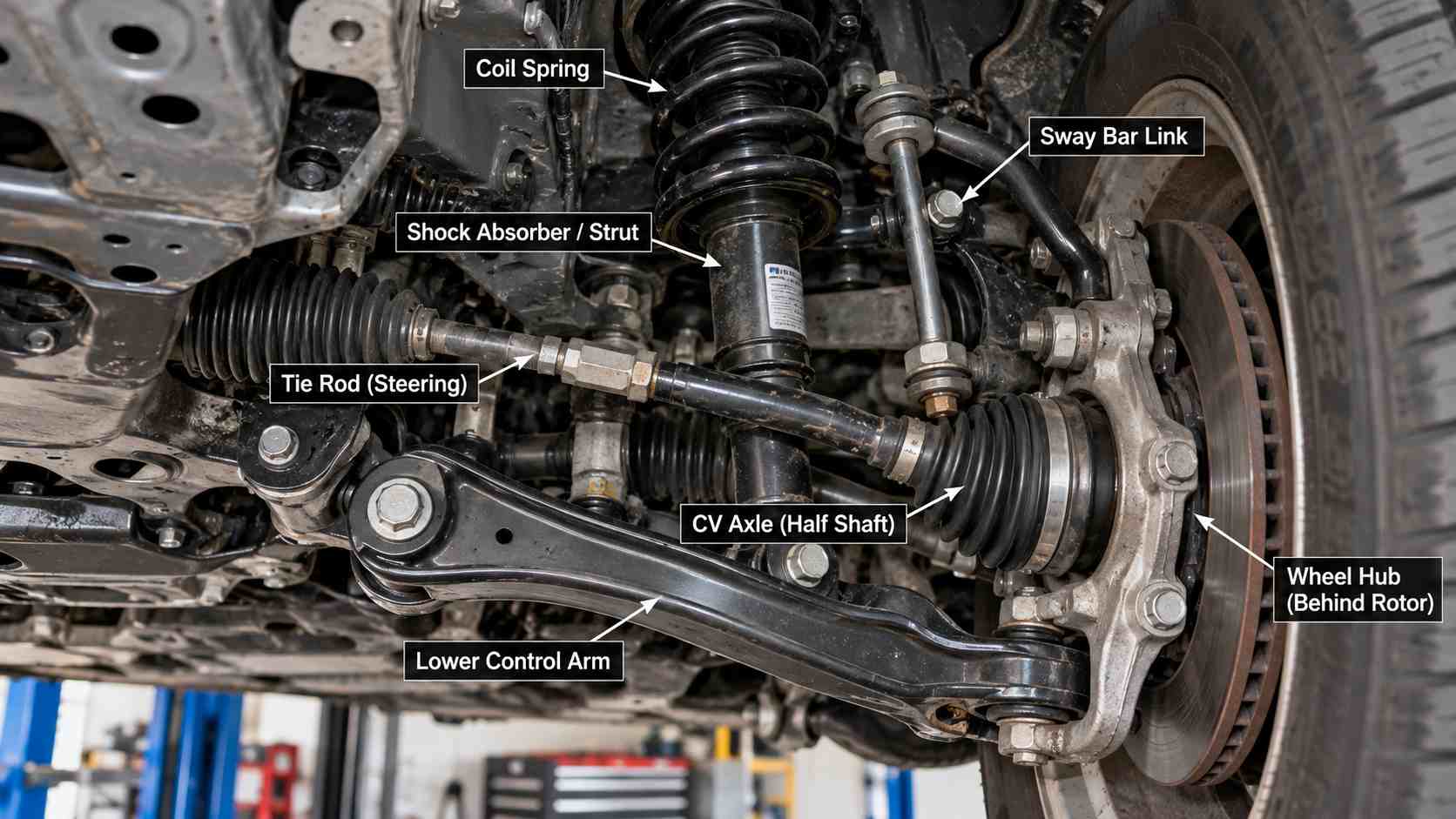
One noise as the car enters a turn can indicate a component reacting to steering movement or a change in vehicle weight. Ball joints, tie rods, strut mounts, and sway-bar links all move or take different loads as a car turns.
Ask a more specific question than, “Does it click when I turn?”
Does it click repeatedly while the wheels rotate, or does it pop once as the vehicle changes direction?
That small distinction can cut the suspect list considerably.
The Most Common Culprit is Either CV Joint or Axle
A CV axle carries engine power to a wheel while still allowing that wheel to steer and move with the suspension. Inner and outer CV joints let the axle operate through changing angles without interrupting power delivery.
Outer joints usually create the familiar turning click because they operate through a larger angle as the wheels steer.
Failure often begins with something less dramatic than the noise itself. A rubber CV boot cracks or tears.
Grease leaks out and can splatter around the inner wheel, suspension, or wheel well. Dirt, grit, and water can then enter the joint.
Once lubrication disappears and contamination arrives, internal joint surfaces begin wearing. Clicking under load can follow.
Front-wheel-drive cars commonly encounter this issue because their front axles have two jobs at once. They need to deliver power while accommodating steering movement. Apparently, asking a component to multitask eventually generates opinions.
Common clues include:
- rhythmic clicking during tight turns
- louder clicking while accelerating through a turn
- dark grease around the inside of a wheel or nearby suspension
- a split, cracked, or leaking CV boot
Finding a damaged boot early matters. If a boot has torn but the joint has not developed internal wear, replacing the boot and grease may sometimes save the joint.
Once a CV joint is already clicking due to wear, replacing the complete axle assembly is commonly the repair.
One classification detail can also clear up some confusion. A CV axle is part of the drivetrain. It is not technically a steering or suspension component, even though its complaint often appears when you turn the steering wheel.
Your steering wheel may announce the problem, but the axle may be making the noise.
When It May Be Suspension or Steering Instead
Not every parking-lot click belongs to a CV joint. Sound character and other symptoms can move attention toward suspension or steering components.
Suspension Clues
Ball joints can produce popping or clunking as vehicle weight shifts during steering. Worn ball joints may also cause vague steering, looseness, or uneven tire wear.
Mileage can add context, although it cannot diagnose the joint by itself. Ball joints may last 70,000 miles or more, but road conditions, salt, water exposure, and driving habits can change that figure considerably.
A high-mileage car that adds clunking over bumps, steering looseness, or uneven tire wear to its turning noise gives the ball joint a much stronger case against it.
Strut mounts and strut bearings allow a front strut assembly to rotate as the wheels steer. Wear or binding can cause clicking or popping during slow steering movements.
A driver may also notice resistance or a slightly notchy sensation through the steering wheel.
Resistance can become more than a subjective feeling as wear progresses. Technical testing cited by Monroe found that a strut bearing still operating after 130,000 kilometers may require 10% to 20% more steering effort than a new bearing.
So if the clicking comes with steering that suddenly feels more like arm day, the strut bearing deserves considerably more attention.
Sway-bar links can create clicking or light clunking, particularly when turning across uneven pavement, ramps, or entrances where one front wheel moves differently than the other.
Wheel bearings belong lower on the list when the symptom is a sharp, repetitive low-speed click. Bearing trouble more often produces humming, rumbling, or growling that becomes more noticeable as road speed increases.
Steering Clues
Tie-rod ends and other steering-linkage parts deserve attention when a click or knock occurs as steering direction changes.
Extra symptoms make that possibility more concerning. Loose or vague steering, poor alignment, wandering, or excessive movement through the steering wheel can indicate play somewhere in the steering system.
Location matters too.
A click heard inside or immediately behind the steering wheel, particularly when the car is stationary, points away from a rotating axle. Steering-column components such as the clock spring become more relevant in that situation.
An airbag warning light appearing with steering-wheel clicking deserves professional inspection.
Power steering problems tend to sound different. Low hydraulic fluid or pump trouble usually produces whining or moaning rather than a crisp rhythmic click. Heavy, jerky, or inconsistent steering may appear at the same time.
A Few Simple Checks Can Narrow It Down
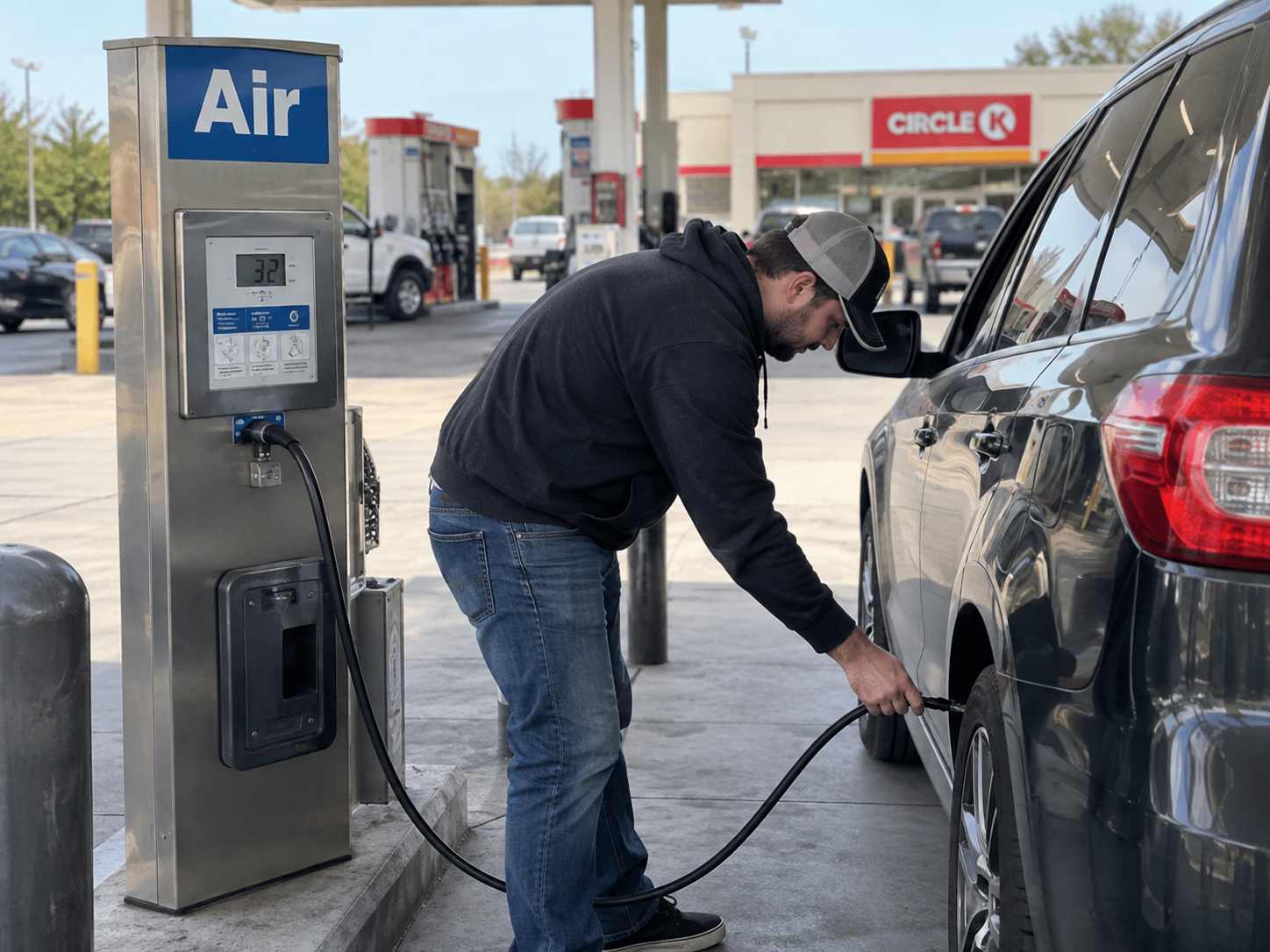
Diagnosis can begin without taking anything apart.
Find a safe, empty area and drive slowly in tight circles in each direction. A figure-eight can work well too.
Pay attention to three details:
- Does each wheel rotation produce another click?
- Does one turning direction make the sound louder?
- Does gentle acceleration make the clicking more obvious?
Repeated clicking that follows wheel speed and gets louder under acceleration pushes the CV joint higher on the list.
Next, park safely and turn the front wheels enough to get a clear look behind them. Inspect each CV boot for cracks, splits, wet grease, or dark grease splatter nearby.
A torn boot surrounded by grease is a particularly useful clue. Mechanical mysteries rarely leave fingerprints, but CV joints sometimes throw theirs across the wheel well.
Road conditions can help separate other suspects.
Clicking or clunking that reacts strongly to bumps, driveway ramps, or uneven pavement gives suspension parts more reason to enter the investigation.
Noise that changes when light brake pressure is applied can point toward loose or shifting brake hardware.
Recent tire or wheel work deserves attention too. Incorrectly tightened wheel hardware can allow movement under cornering load and may produce clicking or knocking.
Never guess at wheel-nut torque. Check the value specified for the vehicle or have the hardware inspected with the correct equipment.
Avoid declaring victory based on sound location alone. Noise travels through metal surprisingly well. A failing component near one wheel can make its complaint seem as though it came out of another part of the front end.
Treat each observation as evidence, not a verdict.
Is It Safe to Keep Driving?

A faint click with precise steering, no vibration, and otherwise normal vehicle behavior does not automatically mean an immediate roadside emergency.
It does mean the cause should be inspected soon.
Avoid hard acceleration during sharp turns until the problem has been identified. Potholes and unnecessary full-lock steering maneuvers are also best avoided.
Stop driving and arrange professional inspection if any of these symptoms appear:
- steering becomes loose, vague, stiff, or starts binding
- steering fails to return smoothly after a turn
- vehicle begins pulling or feels unstable
- clicking turns into heavy clunking, grinding, or banging
- strong vibration or shuddering develops
- noise suddenly becomes much worse
A badly worn CV joint can eventually fail to transmit power to its wheel. Serious tie-rod, ball-joint, or wheel-bearing failures can affect vehicle control.
At that point, solving the noise is no longer mainly about protecting an axle or avoiding an irritating parking-lot soundtrack. Safe steering and vehicle control take priority.
A Wrap Up
Rhythmic clicking that follows wheel speed and gets louder during a tight turn, particularly under acceleration, places the outer CV joint near the top of the suspect list.
A single pop or clunk as vehicle weight shifts points more toward suspension components such as ball joints, sway-bar links, or strut mounts. Loose or imprecise steering combined with knocking during steering changes makes tie rods and steering linkage more suspicious.
Useful diagnosis starts by listening for patterns.
Count how often the noise occurs. Notice which turning direction makes it louder. Pay attention to acceleration, bumps, steering feel, and any visible grease near the front wheels.
“Clicking while turning” describes the scene.
Those extra clues tell you who may actually be responsible.