
You open the dryer expecting warm, dry clothes. Instead, everything feels cold, damp, and suspiciously similar to how it felt an hour ago. Meanwhile, the machine has completed its cycle without displaying a single complaint.
Apparently, spinning clothes around counts as a successful day’s work.
Dishwashers have their own version of this problem. A machine can complete an entire wash cycle and still leave you with dirty dishes. Different appliance, same frustrating mystery: everything appears to work except the part that actually matters.
A dryer that runs but doesn’t heat usually has a problem with its settings, electrical supply, airflow, or heating components. Faulty heating elements, thermal fuses, thermostats, and gas ignition systems can also prevent the appliance from producing heat.
Here’s the important distinction:
A dryer’s motor and heating system operate through separate components. Having enough power to rotate the drum doesn’t necessarily mean the appliance can generate heat.
Why Is Your Dryer Spinning but Not Heating?
Before assuming an expensive component has failed, check the conditions that allow the dryer to produce heat in the first place.
The Dryer Is Set to a No-Heat Cycle
Start with the control panel. A dryer can be working exactly as instructed, even when those instructions aren’t particularly helpful.
Settings labeled Air Fluff, Air Only, or No Heat circulate air without activating the heating system. Such cycles are useful for delicate fabrics and items that shouldn’t be exposed to high temperatures.
However, they’re considerably less useful when you’re trying to dry a heavy load of wet towels.
Try this simple test:
- Select a heated Timed Dry cycle.
- Run the dryer empty for approximately five minutes.
- Stop the cycle, open the door, and carefully check for warmth inside the drum.
Whirlpool’s electric dryer troubleshooting instructions recommend a similar five-minute heating test.
If the drum warms up, the heating system is functioning during that test. Incorrect settings may explain the original problem.
If everything stays cold, investigate the power supply next.
Keep in mind that an automatic cycle’s final cool-down stage intentionally stops heating. Cold clothes at the very end of a cycle aren’t necessarily evidence of a malfunction.
The Dryer Isn’t Getting the Power It Needs
An electric dryer can have enough electricity to spin its drum without receiving enough power to operate its heating element.
Most conventional full-size electric dryers in American homes require a 240-volt supply, typically provided through a dedicated double-pole circuit breaker.
Motor operation can continue on approximately 120 volts even when one side of the electrical supply has been interrupted. Heating elements generally require the full supply voltage.
According to GE Appliances’ troubleshooting information, an electric dryer may operate at partial voltage but cannot heat properly without its required 208- or 240-volt supply.
Here’s what to check:
- Locate the dryer circuit breaker in your electrical panel.
- Look for a breaker that’s tripped or positioned between ON and OFF.
- If a breaker has tripped, switch it fully OFF and then ON once.
- Test the dryer again using a heated cycle.
If the breaker trips again, stop using the appliance and contact a qualified electrician. Repeated trips can indicate an electrical fault that needs attention.
Gas dryers have a different requirement.
Most conventional American gas dryers use a 120-volt electrical connection, while gas supplies the heat.
Check that the accessible external gas shutoff valve is open. On many installations, a valve handle parallel to the gas pipe indicates the open position.
Never loosen gas fittings or disconnect supply lines during troubleshooting.
A Clogged Lint Filter or Dryer Vent Is Restricting Airflow
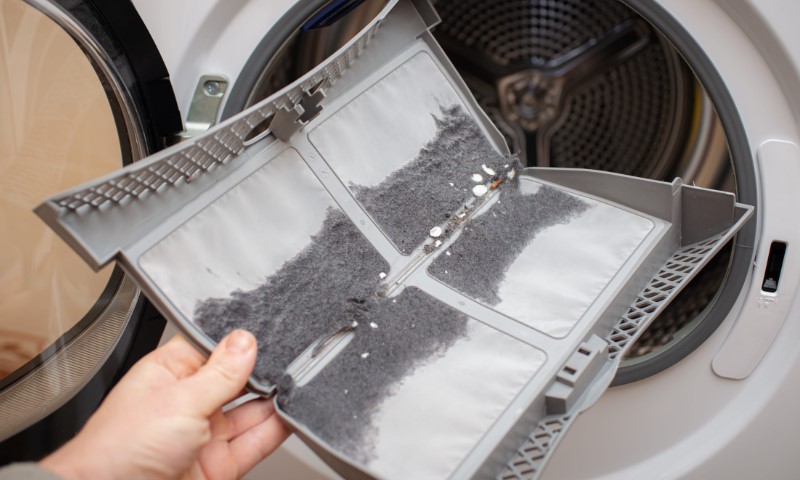
Heat alone doesn’t dry clothes. Warm air must circulate through the drum, collect moisture, and exit through the exhaust system.
When lint blocks that airflow, moisture struggles to escape. Drying takes longer, and internal temperatures may climb high enough to activate protective devices.
A typical load of laundry can send approximately one gallon of water through a conventional dryer’s exhaust system, according to the U.S. Department of Energy’s Building America program.
That’s a substantial amount of moisture to move through a relatively narrow duct.
When lint blocks the escape route, clothes may tumble for another hour without getting much closer to dry. Heat isn’t particularly useful when the moisture has nowhere to go.
Check these areas:
- Lint filter – Remove accumulated lint and inspect the screen for buildup.
- Exhaust hose – Look for crushed sections, sharp bends, or visible obstructions.
- Outdoor vent – Make sure the external flap opens freely and isn’t blocked.
- Air intake areas – Clear obstructions around accessible ventilation openings.
Turn the dryer off and disconnect its power before cleaning exhaust connections or performing maintenance. Avoid damaging or disturbing gas connections.
For condenser and heat pump dryers, follow the manufacturer’s instructions for cleaning filters, condenser components, and accessible heat exchangers. Empty the water collection tank when required.
Blocked airflow generally causes slow drying rather than an immediate, complete loss of heat. However, persistent overheating can damage or activate temperature protection components.
That distinction matters because replacing a failed safety component without correcting a blocked vent may leave the original problem waiting to happen again.
What If the Dryer Still Runs but Blows Cold Air?
Suppose the settings are correct, the electrical supply appears normal, and the airflow path is clear.
At that point, attention shifts toward the components responsible for generating and controlling heat.
The Heating Element Has Burned Out
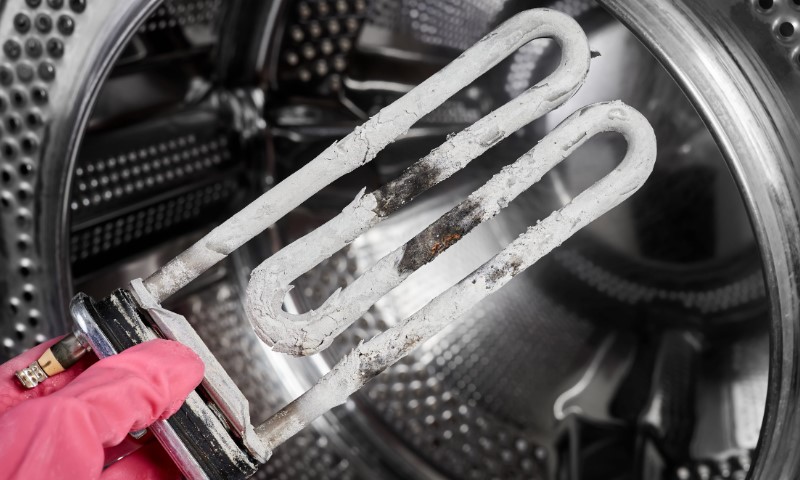
Conventional electric dryers typically produce heat using a resistance heating element.
Electricity passes through a specially designed metal coil, generating heat that warms air entering the drum.
Over time, the element can deteriorate or break. When its electrical circuit opens, the dryer may continue tumbling without producing warm air.
Common clues include a completely cold drum during a heated cycle and normal operation of the display, controls, and motor.
However, those symptoms don’t confirm a failed element. Interrupted power, temperature controls, and safety devices can produce similar behavior.
A qualified appliance technician can disconnect power, test the element for electrical continuity, inspect its connections, and determine if replacement is necessary.
Replacing the heating element only makes sense after testing confirms the fault.
The Thermal Fuse or Thermostat Has Failed
Dryers contain temperature-sensitive components designed to regulate heat and protect against dangerous operating conditions.
Although these parts work together, they perform different jobs.
A cycling thermostat or electronic temperature sensor helps control operating temperature. A malfunction can interfere with heating or cause unusual temperature changes.
A thermal fuse or thermal cutoff protects against excessive heat. Certain devices permanently open their electrical circuits after reaching a specified temperature.
Failure symptoms depend on the dryer’s design. Some thermal fuses interrupt the entire appliance, while other protective cutoffs disable only the heating circuit.
One particularly important detail often gets missed during repairs.
Imagine an electric dryer that heats normally for several minutes, then stops producing heat. Inspection reveals a heavily restricted exhaust duct and an open high-temperature cutoff.
Replacing the cutoff without clearing the obstruction addresses the damaged component but not the overheating condition that may have caused it.
A proper repair involves testing the protective device, checking relevant temperature controls, and correcting any airflow restriction.
Never bypass a thermal fuse or safety cutoff to make a dryer heat again.
The Gas Igniter or Valve Coils Aren’t Working
View this post on Instagram
Gas dryers rely on an ignition system to generate heat.
An electric igniter heats to the temperature needed to light the gas burner. Safety controls and gas valve components regulate fuel delivery.
If the igniter fails, the burner may never ignite, even though the drum continues rotating normally.
Failing gas valve coils can cause different symptoms. A dryer may heat initially but stop heating after the appliance has been running for a while.
For example, a gas dryer that starts with warm airflow but turns cold later in the cycle could have a valve coil problem. However, overheating protection and temperature control faults can cause similar behavior.
Professional diagnosis is necessary to distinguish these possibilities.
Avoid attempting to light the burner manually, bypass ignition controls, or dismantle gas valves.
How Can You Tell What’s Causing the Heat Problem?
A few observations can narrow the list of possible failures before anyone opens the appliance.
| What you notice | Possible cause | What to check first |
| Dryer spins but never heats | Incorrect settings, electrical supply, heating element, or ignition fault | Heated cycle and power supply |
| Dryer heats briefly, then turns cold | Temperature control, restricted airflow, or gas valve coils | Ventilation and heating pattern |
| Clothes stay damp despite some heat | Clogged vent, dirty filter, or overloaded drum | Lint screen, exhaust, and load size |
| Dryer stopped heating after a breaker tripped | Interrupted electrical supply | Circuit breaker |
| Dryer overheats or repeatedly loses heat | Airflow restriction or protective cutoff | Ventilation and professional inspection |
Symptoms are clues, not confirmed diagnoses. Several faults can produce the same behavior, particularly when the motor and controls continue operating normally.
One useful distinction is the difference between a dryer that never heats and one that cannot maintain heat.
Consider these two situations.
A conventional electric dryer completes an entire heated cycle without generating warmth. A missing supply voltage or an open heating circuit becomes an important possibility.
Another dryer produces warm air initially but leaves clothes damp after a long cycle. Restricted airflow, intermittent heating, or an overloaded drum deserves closer attention.
Both machines may appear to have the same problem when you open the door. Their operating behavior tells a more useful story.
Also, avoid judging heat only by touching clothes after a completed cycle.
ENERGY STAR reports that certified heat pump models use around 70% less energy than conventional dryers, partly because they recover and reuse heat rather than continuously exhausting warmed air.
Lower operating temperatures are normal for these machines, so a drum that doesn’t feel especially hot isn’t necessarily evidence of a broken heating system.
Check drying performance and any displayed fault codes before assuming the heat pump has failed.
When Should You Call a Dryer Repair Technician?
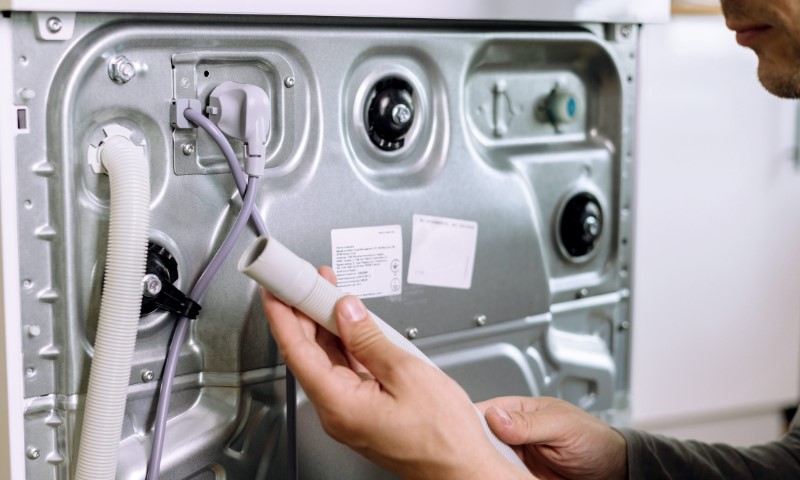
Basic troubleshooting should stop when the problem requires opening electrical compartments, testing energized components, or working on gas equipment.
Arrange professional service if:
- A heated cycle produces no warmth after checking settings, power, and accessible airflow.
- A heating element, thermostat, thermal fuse, or ignition component appears faulty.
- A circuit breaker trips repeatedly.
- A dryer overheats, shuts down unexpectedly, or repeatedly loses heat.
- Electrical connections show visible damage or signs of overheating.
Stop using the dryer immediately if you notice burning smells, smoke, sparks, or damaged wiring. Disconnect power only when it is safe to do so.
If you smell gas, leave the area, avoid electrical switches and potential ignition sources, and contact your gas utility or emergency services once you’re in a safe location.
Gas and electrical faults aren’t suitable situations for experimental troubleshooting.
Before scheduling service, record the appliance’s model number and describe exactly what happens. Mention if heat never appears, disappears partway through a cycle, or returns after the machine cools down.
Such details can help a technician identify the appropriate tests without replacing parts unnecessarily.
Summary
A dryer that spins without heating isn’t necessarily suffering a major mechanical failure.
Sometimes, the explanation is an accidentally selected Air Only cycle or a tripped breaker.
Start with settings, check the power supply, and inspect accessible airflow components.
If those checks don’t explain the problem, a failed heating element, temperature control, protective cutoff, or ignition component may need professional attention.
Getting the drum to rotate is only half the job. Somewhere inside the machine, another component is responsible for making those clothes dry, and finding out why it stopped cooperating is the real repair.